Define what the text is for
Fluent text does not prove that speech was recognized correctly. Developers need to know whether a transcript supports its next use: searching meetings, preparing subtitles, or extracting tasks. Divide the check into matching words against the recording and preserving details that determine what the user does.
First define the format: verbatim transcription or text with fillers and repetitions removed. Comparing cleaned text with a verbatim reference requires shared rules. List critical details in advance: names, identifiers, amounts, dates, negations, and conditions. You will need this list regardless of the overall score.
An illustrative starter set: ten speech clips of 30–60 seconds, with four clean recordings, three containing names and numbers, and three featuring noise or overlapping speech. Add two clips without speech. Use languages and microphones typical of your application. This set can reveal problems but cannot establish accuracy across all incoming audio.
Build a reference and comparison rules
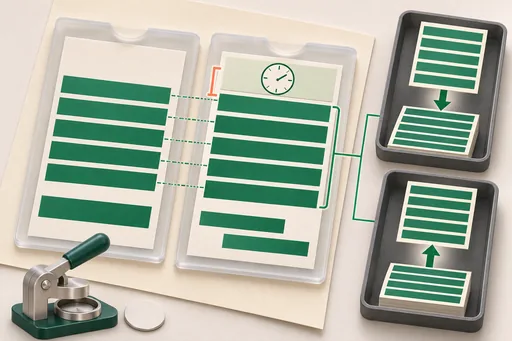
Build the reference by listening to the original audio, rather than correcting the model’s answer from memory. Keep recording names and clip boundaries so disputed phrases can be located again. Do not turn the reference into a summary: word evaluation requires words actually spoken in the recording.
Ask another person to check difficult passages independently. Mark unintelligible speech instead of guessing. If a passage is excluded from scoring, exclude the matching part of the output and report the omitted duration. Otherwise, it is difficult to know how well the score represents the complete recording.
Normalize both texts identically before scoring. Google describes comparison without punctuation or case distinctions. Also define number formatting for your test: for example, convert “42” and “forty two” to one form while preserving the value. Keep originals for checking presentation; retain negations and measurement units.
Count word errors
Hugging Face’s course bases WER on the minimum number of word substitutions, deletions, and insertions needed to match the reference: WER = (S + D + I) / N. N is the number of reference words. Multiply by 100 for a percentage. A lower value means fewer errors of these types.
Align the word sequences first, leaving gaps for deletions and insertions. NIST’s SCLITE documentation describes this alignment step. Comparing words at identical position numbers would let one omission shift every subsequent position. You can work through a short clip manually on paper.
For the overall score, sum errors across all speech clips and divide by their total reference word count. Simply averaging individual clip percentages gives a short phrase the same weight as a long conversation. Also report clean speech, noise, and clips containing numbers separately.
Separate error counts from their consequences
Illustrative example: the reference says, “Do not ship order forty two without customer payment today.” The recognition output says, “Do ship order forty three without customer payment today.” After removing punctuation and normalizing case, the reference has ten words; numbers are written as words here.
There is one deletion, one substitution, and no insertions. WER is 2 / 10, or 20%. Record two critical errors separately: the prohibition on shipping without payment disappeared, and the order number changed. Fixing the number alone cannot restore the instruction while the negation remains missing. Report the time, correct version, and consequence of each distortion.
Another hypothetical example: a 600-word reference loses only one “not.” WER is approximately 0.17%, although the instruction may now mean the opposite. This is an arithmetic illustration, not a model test result. A separate count of critical distortions therefore belongs alongside WER.
Check invented speech and additional fields
Check added text and repetitions separately. Whisper’s official model card warns about phrases absent from the audio, repetitions, and performance differences across languages and accents. These are documented limitations of a specific model; test your chosen system on your recordings rather than extending this warning to every system.
A clip without speech has no reference words, so the stated WER formula cannot apply: its denominator is zero. Instead, record whether invented speech appeared and count these cases separately. Assess music, pauses, and background sounds according to your annotation rules.
If the output contains timestamps or speaker labels, check them separately. Locate the start and end of several utterances, verify speaker changes, and check who owns each task. Set the acceptable timing offset before checking. Correct words under the wrong speaker label can assign work to someone else. Verify field support in the tool you use.
If your tool returns recognition confidence, use it to prioritize human review. Google explains that confidence and WER measure different things. High confidence cannot replace listening. Before setting a threshold, check whether low scores actually accompany errors more often on your dataset.
Make a decision and check changes
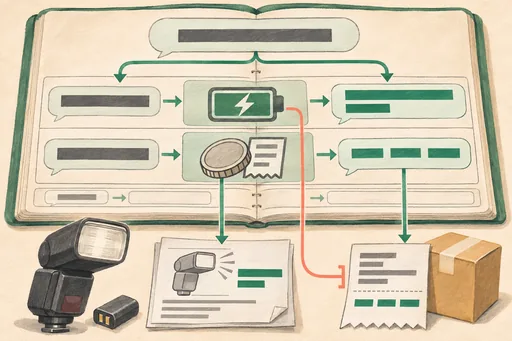
Set acceptance conditions for the downstream use. For task extraction, you could require no confirmed errors in assignees, deadlines, or negations within the checked set. For subtitles, add presentation and timing checks. Finding zero critical errors in a small sample does not guarantee their absence elsewhere.
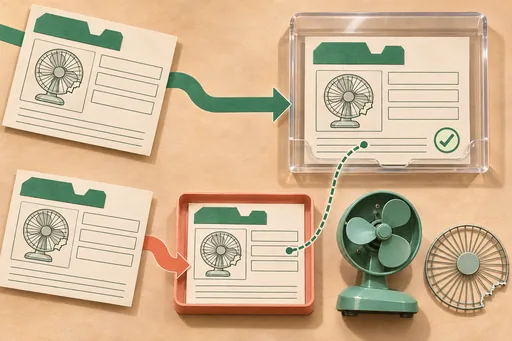
After changing settings, repeat the evaluation on the same original clips with the same reference rules. Keep raw output and edited versions separate: scoring human-corrected text does not measure recognition quality. Listen again where errors disappeared, and make sure neighboring words were not lost.
Produce a short report: dataset composition, normalization rules, WER by group, critical errors, added speech, and the extent of excluded passages. End with a decision about which recordings need an editor. After improvements, test new clips that were not used for tuning to see whether gains extend beyond familiar examples.