First establish what is being cached
Prompt caching reuses a processed portion of shared input. Anthropic’s documentation describes caching a prefix, meaning the beginning of a request, while generating the answer afresh. The cached portion must match exactly. Developers therefore need two separate checks: whether the cache was read and whether the answer used new information after the shared portion.
Gemini API documentation recommends placing large shared material at the beginning and sending requests with similar prefixes close together in time. This provides a starting point for designing the check. Use the documentation for your actual API to establish its hit conditions and reporting fields.
The outcome is a verification record containing input versions, expected answers, and observable indicators. The following procedure uses a fictional example; no generations were run for this article. Prepare it on paper first, then compare it with request records you already have.
Assemble the unchanged portion of the request
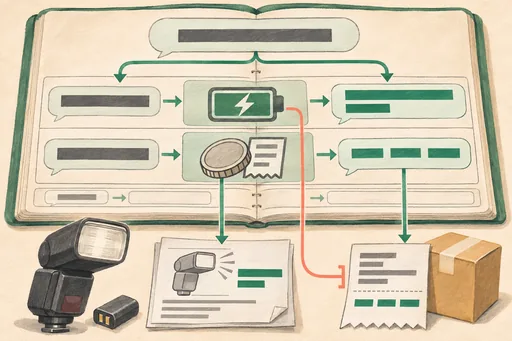
Example: a rental service supplies a manual badge press. Its shared instructions require returning it in a rigid case, removing the die first, and packing the die separately. These conditions are fictional. Assume the application repeatedly answers questions about the same complete manual, changing only the question.
Divide the test input into shared operating instructions, the manual, and the current question. Record each block’s version, message order, model, and settings. Keep these unchanged except for the planned variation. Compare what the application actually sends, rather than relying solely on the template visible in an editor.
The short press description defines reference answers; it does not guarantee enough input for caching. First check feature support, required settings, minimum length, and cache lifetime. Adding irrelevant text just to reach a threshold makes the test less representative of the real task.
Verify cache reads using counters
In the Claude API, cache_creation_input_tokens reports cache writes, while cache_read_input_tokens reports reads. A nonzero write counter therefore does not establish reuse. These field names belong to the Claude API; another interface may report the same events differently.
For each existing request record, note its identifier, submission time, shared material version, and available counters. Track writes, reads, and missing observations separately. Leave a missing field unknown: replacing it with zero quietly turns a lack of evidence into a claim about system behavior.
Do not assume the first request missed the cache simply because it is first in your selection: matching material may have been processed earlier. Without a real counter, your conclusion covers input assembly only. Neither a quick reply nor familiar wording proves that the cache was read.
Use questions requiring different answers
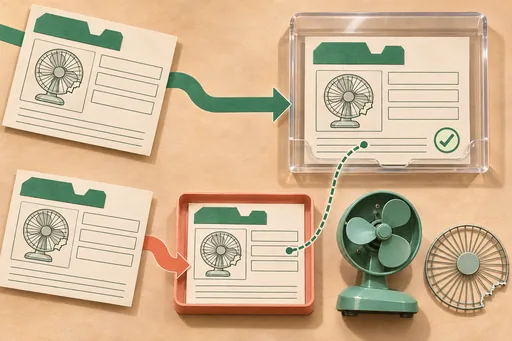
In this example, the first question asks what container the press must be returned in. The reference answer is a rigid case. The second asks whether the die should remain installed. The reference answer is to remove and pack it separately. Different answers help reveal accidental reuse of an earlier response.
Prepare this sequence: the first question, an exact repeat, then the second question with the same manual. Check counters and answer meaning separately at every step. Reading shared input successfully is compatible with different answers; identical wording is not the test’s objective.
Next, create a manual version specifying a protective bag instead of a case. Ask the first question again. The answer must now specify the bag. Do not require all cache reads to disappear: an earlier unchanged portion may still hit. The check concerns use of the current document, rather than elimination of caching.
Find an unnoticed prefix change
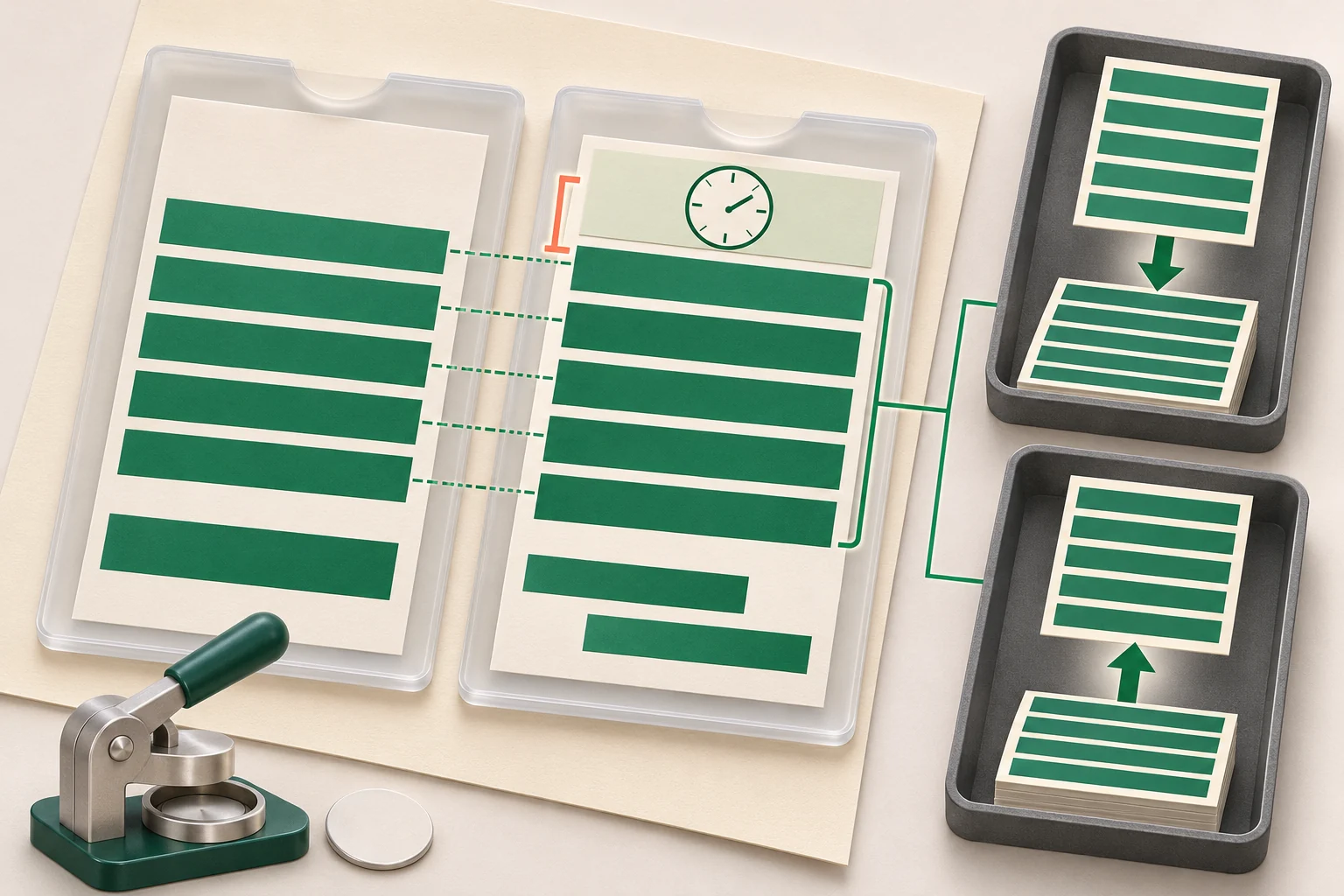
Another example variation: the application inserts the current time before the manual, although the question does not depend on time. Compare two fully assembled inputs. Find the first difference and locate it relative to the shared portion. Check document order and line breaks separately.
Anthropic’s Cache diagnostics documentation distinguishes request divergence from actual cache reads. Matching structure does not guarantee a hit, for example if an entry has expired. Missing or unfinished diagnostics do not establish a match either. Record those cases separately.
If a variable field matters to the answer, give it a place in the changing portion while preserving instruction roles and priority. Otherwise, remove it from the input. After the fix, recheck the whole set: the original question, the different question, and the updated manual. More reads are useful alongside correct answers.
Define the limits of your conclusion and its application in SeaGenera
A single hit establishes neither savings nor faster performance. Those claims require separate observations of total request time and confirmed charges for comparable tasks. The procedure above answers a narrower question: whether shared input is reused while answers still reflect current information.
The public SeaGenera documentation supplied on November 20, 2026 does not confirm prompt cache controls or forwarding of these counters. Provider support does not establish that Claude API parameters are available through SeaGenera. Lack of confirmation also does not prove that caching is never applied.
Finish the record with two decisions: whether cache reads are confirmed and whether the meaning checks passed. For example, input assembly might be verified while cache use remains unconfirmed. Preparing reference answers and reviewing existing records require no new generations; retain an “untested” status wherever real observations are missing.