Define the decision being tested
A strong AI score may come from an answer hidden inside the test. An exported request can include its final category, a technician’s note, or the reference answer. Google describes target labels entering input features as label leakage. When evaluating a language model, look for an equivalent defect throughout the prepared request.
First, record the task and decision time. For example, an assistant must route a customer’s first message before anyone examines the item. The test should therefore reproduce information available when that message arrived. The technician’s final diagnosis belongs to a later stage, even when stored in the same request record.
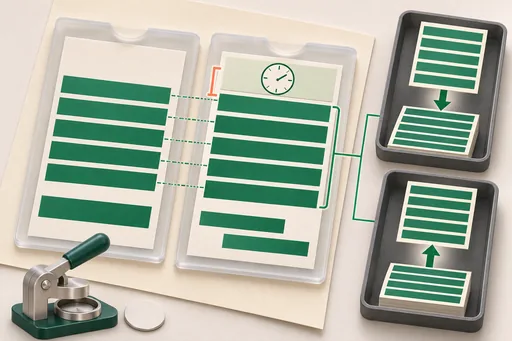
The following is an independently proposed input audit procedure. Its deliverable is a field register covering each field’s name, source, creation time, availability to the application, permission for model inclusion, and justification. This document explains the contents of every test request before its answer is evaluated.
Check when each field became available
Microsoft’s documentation on reconstructing historical features accounts for delays between an event and its data reaching a system. This distinction matters in testing: a value might have existed before the decision, while the application could not yet read it.
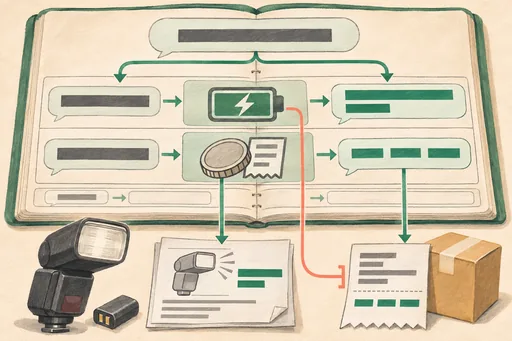
Find evidence of availability for every field: the original message, an arrival record, or a saved record version. For example, in an illustrative record, a spare part’s status was updated at 09:58 but reached the application at 10:03. Exclude it from a decision made at 10:01. All times in this example are Moscow time.
Check editable fields separately. Today’s record may contain an addition made after the request arrived. If an earlier version is unavailable, mark the input as impossible to reconstruct. Do not replace an unknown historical value with an empty field: that creates a different situation and conceals the provenance problem.
Example: a broken umbrella request
Consider a fictional example. At 10:00, a customer writes: “A rib has come loose; the fabric is intact. Can I bring the umbrella in today?” At 10:01, the assistant must choose an initial route: frame inspection, fabric inspection, or clarification. The illustrative rule routes rib problems to frame inspection; same-day availability is outside this assessment.
At 11:20, a technician adds a note about replacing a rivet and the final category “frame.” Later, the test editor records the expected route. The combined export now contains the original message, the customer’s selected branch, the technician’s note, the final category, and the reference answer. Sending the entire row would expose information unavailable at the original decision.
Include the original message and branch in the permitted input if both were available by 10:01. Exclude the technician’s note and final category. Keep the reference answer in a separate evaluation record. Its justification should cite the original message and routing rule; the later diagnosis does not determine the initial route.
Inspect the assembled request
A clean source table is insufficient to check request assembly. Inspect the prepared input after instructions, conversation history, and tool results have been added. In the SeaGenera API, this check covers the entire messages array. Record each added passage’s origin and whether it was permissible at the chosen decision time.
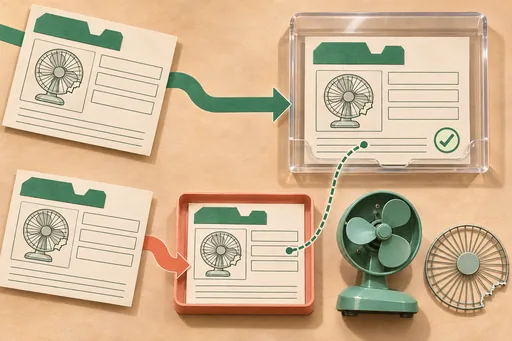
Check assembly without calling the model. Make two copies of the illustrative record and change only excluded fields: the technician’s note, final category, and reference answer. Everything visible to the model should remain identical. Then add a new administrative field containing the answer: it should also stay outside the request.
To detect accidental copying, put the fictional marker “umbrella-control” in the excluded note and check that it is absent from the prepared text. This is a supporting check: a paraphrase may lose the marker while retaining the clue. Also compare both complete inputs and investigate every difference, including automatically added summaries.
Define checks and an acceptance rule
For an illustrative audit, prepare twelve records: four with later notes, four with reference answers under different field names, and four with permissible changes to the original message. This is a proposed assembly test, not the results of an experiment. The final group checks that useful changes actually reach the input.
Record how many requests contain prohibited information and how many records were checked overall. Separately list fields whose availability times remain unconfirmed. The acceptance rule for this procedure is zero detected transfers of prohibited information, confirmed availability of included fields, and preservation of permitted content.
After a fix, repeat the same checks and add a case containing a new administrative field. If some historical records cannot be reconstructed, report their number and exclusion reasons separately. Removing difficult cases can change the dataset’s composition; the remaining records need their own check against the requests encountered in practice.
What this audit does not establish
Later information can legitimately serve as the reference for a different task. For example, a diagnosis after inspection can support evaluation of a fault prediction based on an early message. Prediction accuracy and correct initial routing are different measures. Before labeling examples, define the action that the model’s answer should support.
Clean inputs also do not prevent settings from being tuned to the test. Google warns that repeatedly using evaluation data to guide improvements reduces the independence of the assessment. Treat cases used to revise instructions as development material; conduct the final evaluation on separately held-out requests.
The audit cannot establish what entered the model’s pretraining or guarantee decision quality. It checks a specific input preparation process. Retain the field register, assembly rule versions, and illustrative records. Repeat the checks after changes to exports, conversation history, or connected tools: each change expands what needs inspection.