Start with the next action
After a long discussion with AI, a developer may need to hand a task to a colleague or continue it in a new session. A conventional recap can be short while leaving the central question unanswered: what happens next? A useful summary should preserve the state of the work at handoff.
Anthropic describes compressing conversation history to continue work and warns that excessive compression can remove important details whose significance becomes apparent later. This limitation of the approach needs consideration when preparing a handoff. [Anthropic’s article](https://www.anthropic.com/engineering/effective-context-engineering-for-ai-agents).
What follows is an independently proposed practical method. First identify the recipient and the immediate action: reproduce a bug, finish a check, or prepare a change for discussion. This determines which details are essential. Handing over a check requires different information from explaining an architectural decision.
Record the state and information status
Before shortening anything, define the boundary of the source material: the last message included, the version under discussion, and which results apply to that version. “The latest build” quickly becomes ambiguous. Use a stable version label or another available identifier, together with the time of the last check.
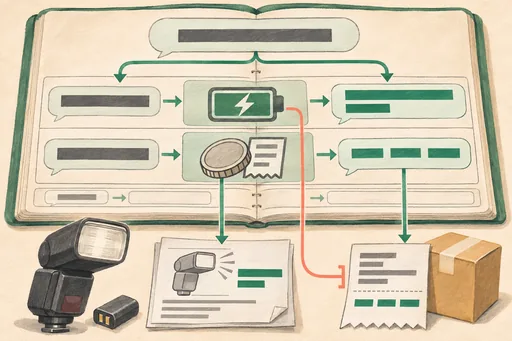
Separate information by status. An observation describes an obtained result. A decision records an agreed choice. A proposal identifies an action not yet performed. An unknown marks an open question. An AI suggestion to run a check does not mean it happened. Changing data handling does not confirm that a bug is fixed.
Ask the model to retain these distinctions while shortening the material. For each result, include the scope and conditions of the check when the conversation provides them. Mark missing information as unknown. Do not fill a gap with an assumption simply to make the record look complete.
Build a continuation record
A useful arrangement has six fields: goal, current state, mandatory constraints, decisions with reasons, open questions, and the next step with its completion criterion. This is a working structure for a handoff. Populate fields only where information exists; missing information should also remain visible.
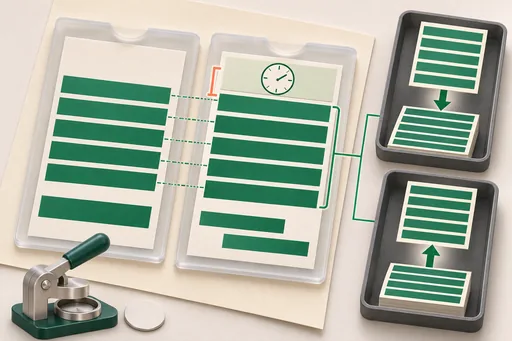
First remove repetition, greetings, and discussion details that do not affect continuation. Replace several identical results with one adequately qualified account. Retain a failed approach if the recipient would probably repeat it without that record. Include the reason for abandoning it when the history provides one.
Check the dependencies of the next step. If an action applies only in a test environment or requires compatibility to be preserved, place that condition beside the action. When space is tight, shorten explanations and background while retaining information that changes the recipient’s choices.
Illustrative example: an export change
Consider a fictional example. The goal is to remove duplicate export rows, leaving one row per record. Record handling has changed in test build B. The ordinary dataset check passed; the dataset involving resubmission remains unchecked. Column order must stay unchanged because the client’s import depends on it. Repeated event delivery is a possible cause, but it remains unconfirmed.
A poor summary of this example reads: “Export fixed; checking remains.” It turns a handling change into a confirmed fix, hides the scope of completed checks, and loses the compatibility constraint. The recipient cannot tell which scenario remains open or which properties of the result must be preserved.
A working record for this example reads: “Goal: one export row per record. State: handling changed in test build B; ordinary dataset checked. Constraint: preserve column order for the client’s import. Unknown: cause of duplicates unconfirmed. Next step: check resubmission on build B. Criterion: one row per record with unchanged column order.” It preserves the information needed to continue.
Check whether work can resume
The SummEval study evaluates language quality and factual alignment with the source separately. When reviewing a handoff record, it is therefore useful to separate readability from preservation of meaning. This applies that distinction to our task. [The SummEval study](https://aclanthology.org/2021.tacl-1.24.pdf).
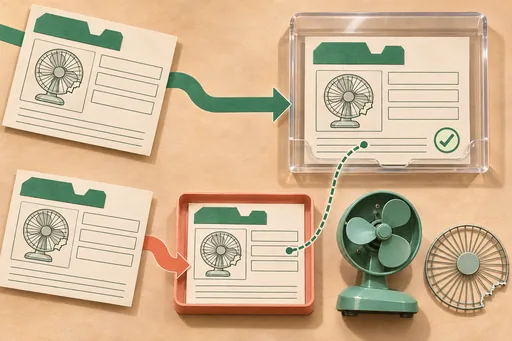
First compare the record with the original conversation in both directions. Locate every mandatory constraint in the summary. Find support in the history for every claimed result. Specifically check status changes: a proposal must not become completed work, and a limited check must not become a claim of complete readiness.
Then run a resumption test: give the record to a colleague or a new AI session and ask only for a description of how to continue. The recipient should identify the version, outstanding check, constraint, and completion criterion. Add information wherever guessing is necessary. For the export example, the answer should retain build B, resubmission, and unchanged column order.
Recognize the summary’s boundaries
The record communicates a description of the state. The recipient separately needs the necessary source materials and access to the version discussed. Mentioning a check result cannot replace its details when diagnosis requires them. Identify where those materials can be found so brevity does not create extra work reconstructing context.
After further changes, update the record against the original history and actual state. Repeatedly shortening previous summaries can preserve an old inaccuracy while obscuring its origin. Pay particular attention to unfinished actions: yesterday’s proposal may now have been completed, cancelled, or become irrelevant.
If essential information exceeds the required length, increase the allowance or move details into a clearly connected appendix. Checking the handoff does not guarantee successful development afterward. It helps reveal specific information losses before the recipient starts acting.