What moving a block tests
A long document can fit into a request while an important condition still goes unused. In Lost in the Middle, published in TACL in 2024, the position of relevant information affected performance on the models studied. This justifies testing your configuration; those findings do not automatically describe every current model.
The proposed procedure asks one question: does the assistant apply the same condition at different positions in the input? Preserve the question and document contents, move one self-contained block, and evaluate each position separately. The practical result is a record of how answers depend on evidence position.
All documents, identifiers, and numerical examples below are fictional. No model runs were performed. You can prepare the collection manually before deciding whether to conduct an evaluation.
Prepare the condition and reference answer
Illustrative example: a workshop supplies a portable T-8 shadow theatre kit. A self-contained memo, S17, states that this model requires two side supports and that a central post cannot replace them. The order record lists a frame, a screen, one side support, and a central post.
Ask whether the order can be handed to a courier with the listed contents. Request a decision, the missing part, and the supporting memo identifier. The reference answer is: not ready, one additional side support required, supported by S17. A correct refusal with an incorrect explanation is insufficient.
Other memos cover packaging, screen storage, and other models. For example, the T-6 genuinely needs only one support. A reviewer must confirm that each statement has a clear scope. Moving S17 must not change chronology, rule precedence, or the meaning of references between documents.
Build comparable inputs
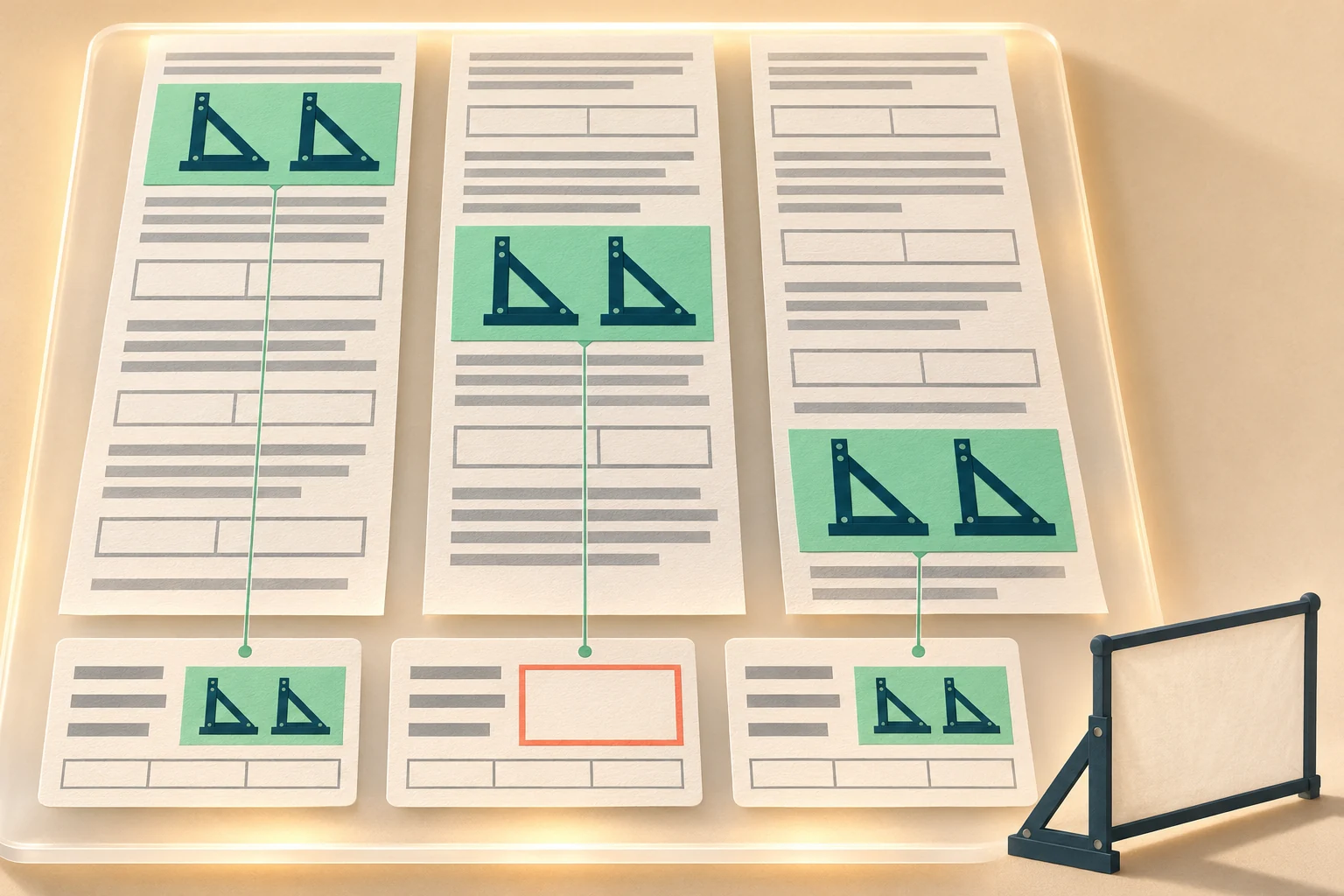
Create three versions of one collection. Place S17 at the beginning of the document block, approximately halfway through its text, and at the end. Preserve its contents and identifier. Keep the other memos in their original relative order and place the question after the documents in every version.
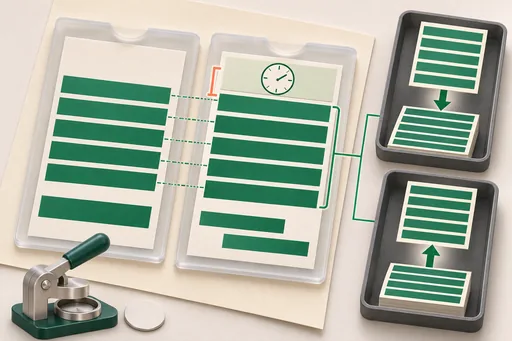
Add a short control input containing only the order record and S17. Then prepare two sizes, for example collections of 12 and 36 memos, including S17. The smaller collection is contained in the larger one. Within each triplet, only S17’s position changes; increased length is tested separately.
Before testing, inspect the assembled input: are all memos included, without truncation or an unintended summary? Otherwise, you might blame the model for missing information it never received. In SeaGenera, text checks can use Playground or the API; verify parameter support in the model card.
Preserve repetitions and supporting evidence
Record the model identifier, date, available settings, response limit, and application instructions. Start each attempt without previous conversation or a completed answer. Alternate positions so middle-position checks do not form a separate late batch. Keep the question wording unchanged between attempts.
Example plan: three repetitions at each of three positions across two lengths produce 18 attempts. Three additional short controls bring the plan to 21 attempts. This describes a future evaluation, not completed requests. Retain every response, including errors and unfinished attempts.
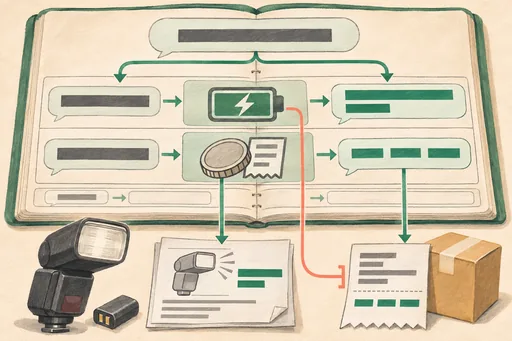
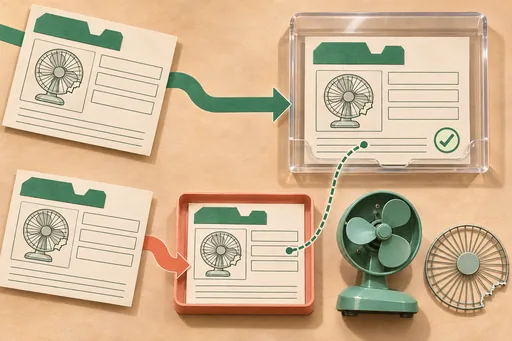
Record input size, position, repetition number, decision, missing part, evidence, and rejection reason. Check the conclusion and its support separately. Naming an existing S17 counts only when its contents actually justify the answer. Claiming that the central post is missing is incorrect in this example.
Evaluate each position separately
Illustrative calculation for one input size: the beginning produces three correct answers out of three, the middle one out of three, and the end three out of three. Combining these into seven out of nine hides where failures cluster. Report the three results separately, alongside error descriptions.
Set acceptance rules beforehand. For example, require a correct decision and supporting evidence in all nine attempts at each length, plus all three short controls, before proceeding. This is a strict rule for this small collection, not proof that the application is error-free.
If the short control also fails, first investigate interpretation of the condition and question. If it succeeds while middle-position failures recur in long inputs, record that observed dependence. RULER supports varying task length and complexity; its authors also stress that synthetic evaluation cannot replace realistic tasks.
Verify changes to context delivery
When you find a problem, try supplying a compact collection of relevant memos while preserving their identifiers and scope. Alternatively, change document order. Evaluate the entire revised process: context preparation can itself exclude a necessary condition. Do not add the reference answer to the question.
After changing the process, test fresh examples: change the theatre kit model, required support count, and actual contents. Prepare reference answers independently. Keep different positions for the relevant memo so improvement does not depend on one successful arrangement. A small number of repetitions leaves substantial uncertainty.
NoLiMa deliberately reduces literal overlap between questions and relevant information. For this procedure, that motivates including natural questions that do not repeat the condition’s wording. Even successful rearrangement shows robustness only on tested materials; it neither reveals the model’s internal mechanism nor establishes a universally useful context length.