First decide what should remain consistent
After you changed the temperature, the model produced a good answer. Did the setting improve the result, or was this simply a suitable variation? Answering requires repeated requests and predefined success criteria. The practical outcome is a run log and a justified setting choice for one particular model and task.
Transformers documentation connects temperature to next-token selection probabilities; applying it requires sampling to be enabled. Higher temperature generally allows greater variety. This describes the generation mechanism: factual correctness still needs separate checking. The library’s do_sample parameter also cannot automatically be treated as an available field in another service’s API.
Separate three questions. Are answers identical word for word? Do they preserve required information and actions? Is that information correct? An identical mistake means highly repeatable wording but task failure. Different wording can satisfy the requirements equally well. Choose the property you need before reviewing results, so appealing style does not replace your quality criterion.
Freeze everything except temperature
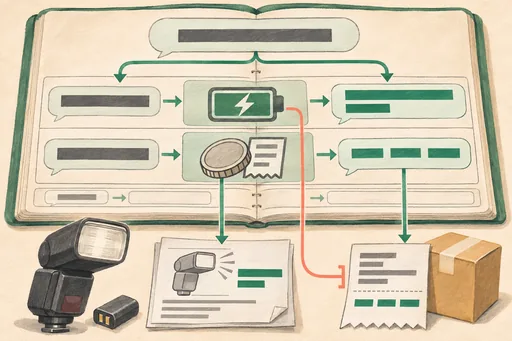
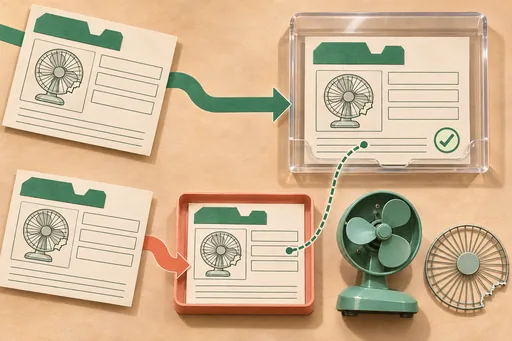
Create an experiment record: model identifier, exact version if available, date, complete messages with roles and order, attachments, output limit, reasoning settings, and other generation parameters. Record which fields use defaults, too. Label an unavailable version or an internal provider setting as unknown.
In SeaGenera, check the model card and API documentation: inclusion in supported_parameters does not necessarily mean availability through the service’s API. Verify temperature and seed support separately. For some models, the provider may ignore sampling settings. An accepted request therefore does not, by itself, prove that temperature actually changed.
Start every run with the same history. Adding the previous answer and asking for a correction creates a different input. For your first experiment, use saved text without live search or changing tool results. If that workflow is your subject, retain the external data received and examine changes to it separately.
An illustrative backup notification
Consider a fictional application interface example. The source facts are: the backup was not created; original files are unchanged; the next attempt will happen in 15 minutes; the user does not need to press anything now. We are testing preservation of these four facts during rewording. The number and circumstances belong only to this example.
The task could say: write a calm, two-sentence notification of no more than 40 words; preserve all four facts; add no failure causes or new actions. Before running trials, prepare a rubric: four separate factual checks, no invented causes, no additional actions, and compliance with the word and sentence limits.
An acceptable example written for this article: “The backup was not created, and the original files are unchanged. The next attempt will happen in 15 minutes; you do not need to press anything now.” Replacing the ending with “try again in 15 minutes” changes who performs the action. That is a semantic error even if it sounds natural and fits the interface.
Run a small series of repeated trials
If the model allows temperature changes, choose two values within its permitted range. For example, 0.2 and 0.8 are illustrative comparison points, not universal recommendations. Run five trials per setting. Cap the total number of attempts beforehand and retain every answer, rather than only the ones you like.
Shuffle the order of the settings beforehand so one does not occupy the beginning of the series and the other the end. If seed is available, prepare five distinct values for the main series and use the same list at both temperatures. This makes conditions explicit but does not guarantee identical selection sequences between settings.
To separately investigate repeatability of a specific request, repeat it with the same seed and other fields. Google cautions that a fixed seed does not guarantee deterministic output; changing temperature can also change the result with the same seed. Repeating one seed and testing different seeds answer different questions, so label them separately.
If seed is unavailable, make ordinary independent submissions and record that limitation. Five repetitions are a suggested preliminary check, not proof of reliability. They help reveal obvious variation but cannot reliably measure rare errors. An absence of differences also does not prove that the parameter is being applied.
Count wording matches and usability separately
For each temperature, first record how many of the five attempts produced complete answers. Among complete answers, find the most frequent exact wording and divide its frequency by their total count. Separately calculate the share passing the entire rubric. Record delivery failures and incomplete answers separately, preserving the original attempt count.
An illustrative thought experiment: five identical notifications missing the delay produce perfect wording agreement and no usable answers. Five different notifications preserving every condition could all pass the rubric. The share of repeated wording therefore describes variation; it cannot determine the setting choice alone. No measured trial results are reported here.
Hide the temperature from the reviewer and shuffle answers before scoring. Ask a colleague to independently check at least disputed cases against the four source facts. Give a specific reason for every failure: missing delay, changed actor, or invented cause. If you revise the rubric after seeing results, conduct a new verification series.
Verify the conclusion and state its boundaries
Even temperature zero does not promise an absolute match: Google allows for small differences. PyTorch documentation also warns about reproducibility across versions and platforms despite identical seeds. These are reasons to limit experimental promises; a single changed answer cannot establish what happened inside a provider’s infrastructure.
Ask a colleague to reconstruct conditions from the experiment record without verbal guidance. Then repeat a small series using a new, predetermined seed list, if supported, while preserving the input and rubric. If the setting’s advantage disappears or the direction of differences reverses, evidence remains insufficient for a confident decision. Keep both series.
The final record should connect model, version, input, settings, and observations. Keep the conclusion narrow: which temperature produced more usable notifications in the checked series, and how much wording varied. Other languages, documents, and tasks need their own checks. Use an approved template for mandatory exact wording: generation repeatability alone provides no such guarantee.