Separate the four retrieval directions
A user asks a question in Russian, while the required instructions exist only in English. An AI assistant may produce a convincing answer even when retrieval has missed that document. It is useful to test this scenario before generating the final answer: check whether the required evidence appears in the results. The practical deliverable is a matrix showing successful and unsuccessful language directions.
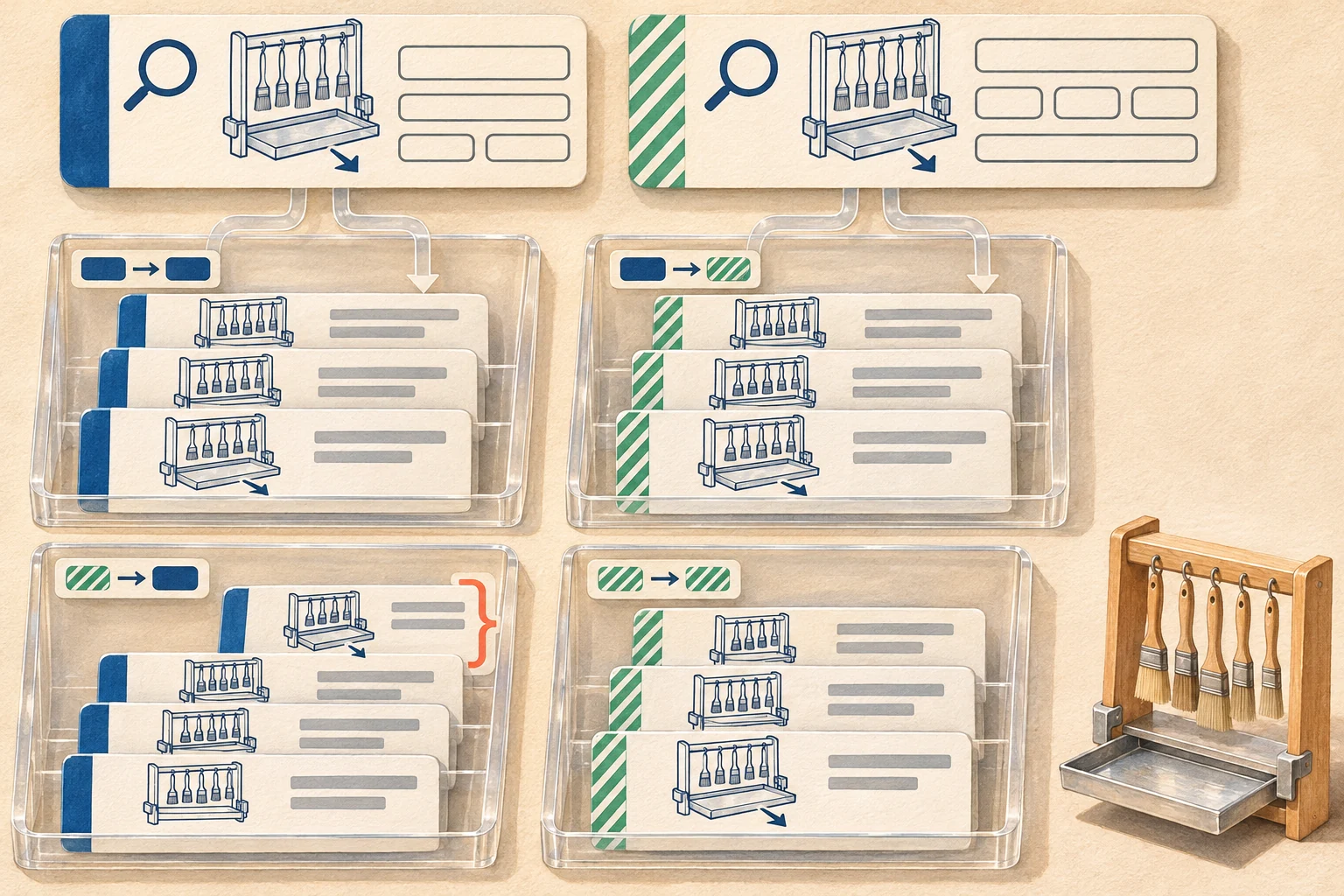
The word “multilingual” in a benchmark description needs closer examination. For example, MIRACL covers 18 languages, but its retrieval tasks use queries and documents written in the same language. The practical implication is that this result alone does not establish retrieval across languages. For Russian and English, fill four cells: Russian queries against Russian documents, Russian against English, English against Russian, and English against English.
Prepare documents containing the same facts
Illustrative example: an application retrieves help documents about a brush drying rack. Prepare 12 short help documents and a verified translation of each. This produces two collections of 12 documents. Give each pair a shared content identifier and each language version its own document identifier. You can then establish whether the required fact was retrieved regardless of its language.
Example question: “Как снять поддон у стойки с боковыми защёлками?” Its English version is: “How do I remove the drip tray from the rack with side clips?” The relevant document describes releasing both clips and withdrawing the tray. Include instructions for another rack version with screw attachments and a guide to cleaning brushes among the other documents. These provide plausible competing results.
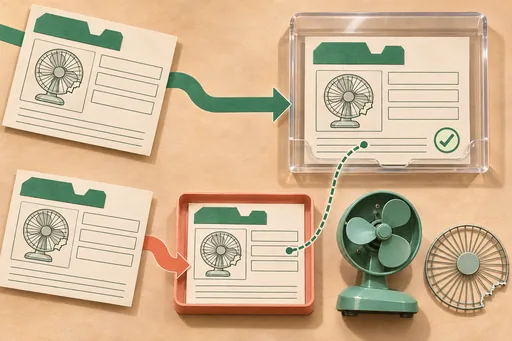
For every question, identify the acceptable documents and the passage containing the answer in advance. A bilingual reviewer should confirm that both questions ask about the same action and that the translated documents preserve the mechanism and conditions. If a translation adds a clue or loses a restriction, the comparison changes the task’s content as well as its language.
Freeze input preparation
Save the exact queries and documents, embedding model settings, text preparation rules, retrieval method, and result list size. If an additional reranking stage is used, freeze its settings too. Change only the intended language between the four directions. Accidentally adding different headings or administrative instructions makes discrepancies harder to explain.
Check the requirements of the particular model. For example, the official multilingual-e5-base model card requires separate prefixes for queries and documents, including non-English texts, and warns that long inputs are truncated to 512 tokens. These are requirements of that particular model. Confirm that the necessary passage actually participates in retrieval rather than falling outside the processed input.
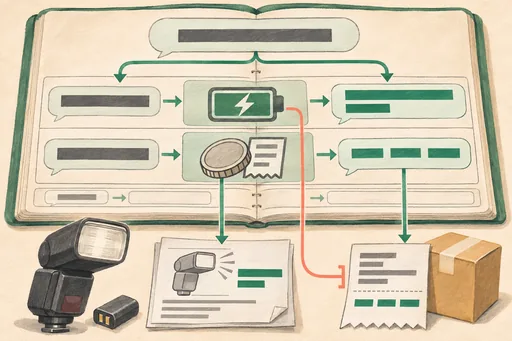
SeaGenera provides embeddings and reranking through its API. For this protocol, prepare your own test collections, translation mappings, and evaluation log. The availability of an API method does not establish retrieval quality across languages. Documents and reference labels can be prepared without generation requests; no paid model requests were made for this article.
Count successful retrievals and test the mixed collection
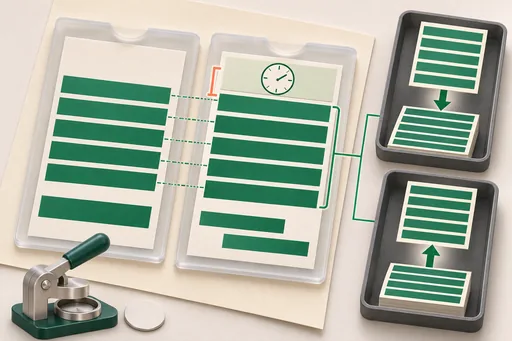
First, test the four directions using the separate collections. For every query, save the first three documents, their positions, and whether the predefined evidence is present. In this example, success means that at least one acceptable document appears in the first three results. Use the same success definition in every cell.
Calculation example: if the required document is retrieved for nine of 12 planned queries in one direction, the success rate is 75%. This is hypothetical arithmetic, not an experimental result. Record failures, empty results, and incomplete attempts separately; they remain among the planned checks. Show each matrix cell individually so that an overall figure cannot conceal a weak direction.
Then combine both collections into a set of 24 documents and repeat retrieval. Translations now compete for positions. Preserve the original results, but also count unique content identifiers: two language versions of one document provide one piece of evidence. Check whether translated copies occupy positions needed by other relevant instructions. For questions requiring several documents, define the complete set of necessary content in advance.
Address an observed language gap
If Russian queries retrieve Russian documents but miss English ones, check terminology and text preparation settings. You can then test translating the query into the documents’ language as a separate option. Keep the original and translation together: changing a component name or product version can alter retrieval. Compare the original approach and the translation approach using the same questions and collections.
The study Language Bias in Multilingual Information Retrieval found language biases in the systems it examined using comparable queries. This provides a reason to test your own retrieval, but does not predict results for your language pair. Assess the usefulness of the retrieved evidence. Equal numbers of Russian and English documents are not inherently the goal. After tuning, repeat the evaluation with new questions that were not used to select terminology.
Define acceptance conditions and the limits of the conclusion
Before evaluation, agree on the permitted number of misses in each direction, mandatory scenarios, and the result list size the application will actually receive. The final record should contain the collection contents, configuration versions, four success figures, mixed-collection findings, and specific failed questions. Give a colleague the source documents and reference labels: they should be able to verify a retrieved document’s relevance without guessing how you annotated it.
A small translated dataset helps uncover defects, but does not measure the entire user workload. Real queries may include abbreviations, mixed languages, and specialist names. Translated documents may also have unusually similar styles, so add a separate evaluation using naturally occurring documents in both languages. The conclusion applies only to the tested collection and settings. Retrieving the correct passage also does not guarantee that the model will use it correctly in its final answer.