Gather three matching versions
When the source changes, an approved AI translation needs updating. Regenerating everything can disturb good editorial decisions, while replacing one sentence can leave dependent explanations containing old information. The practical outcome is a package of targeted edits explaining which parts of the translation can be retained.
Prepare the old source, its approved translation, and the new source. Identify each document’s revision and the translation direction. If you cannot establish which source revision was translated, restore that connection first. Otherwise, outdated information can look like a model error, and an intentional adaptation can look like an unsupported addition.
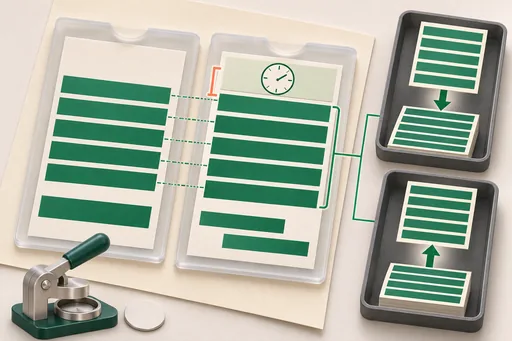
Divide the document into recognizable blocks: return conditions, preparation, and kit contents. Give them stable labels in your working register, regardless of their position on the page. Record the audience, language variety, and approved terminology alongside them. This lets you discuss a particular block after paragraphs move or change order.
Determine what needs updating
Mozilla’s Fluent guidelines require a new message identifier when existing translations need updating; corrections affecting only the English source generally do not require one. This is a rule for a particular localization system. The following independent editorial workflow concerns documents and can be used without Fluent.
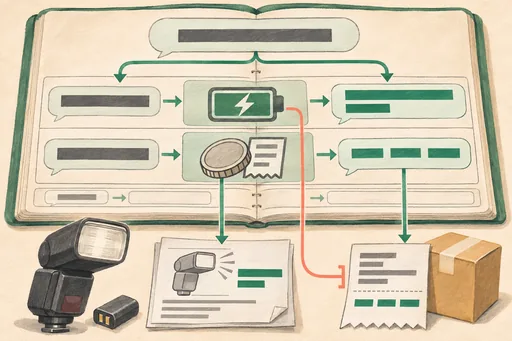
Compare the old and new sources. Assign an action to each block: retain, recheck, replace, add, or delete. Record the reason: a new deadline, a removed condition, a clarified object, or a corrected typo. The number of changed characters does not establish how substantially the reader’s instructions have changed.
Find dependencies separately. A translator may have expanded an abbreviation, repeated a deadline, or replaced a general description with a specific name. Consequently, an unchanged source block may still require review. Check explanations, headings, captions, and repeated references to the changed condition, even when the source comparison does not highlight them.
Example: one deadline affects two sentences
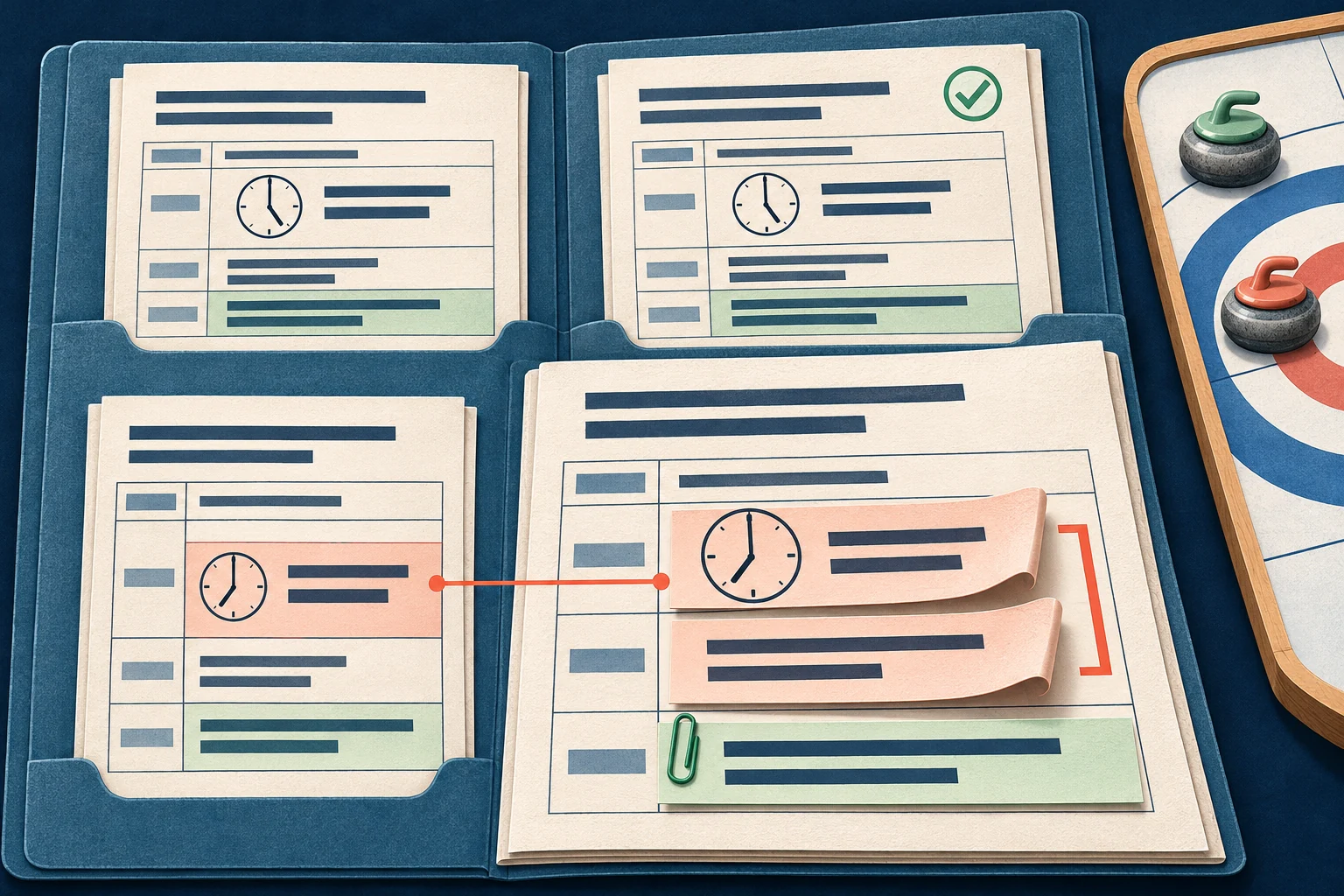
This illustrative example is entirely fictional. A tabletop curling rental notice contained the Russian sentences: “Верните набор не позднее 17:00. При опоздании сдайте его на следующий день”. Its approved English translation was: “Return the set by 5 pm. If you miss the 5 pm deadline, return it the next day”.
The new source revision changes the time to 19:00, leaving the second sentence unchanged. Updating only the first translated sentence would give readers two different deadlines. In the register, assign “replace” to the first sentence and “recheck” to the second. Following that check, include the second sentence in the replacement package too.
The proposed update is: “Return the set by 7 pm. If you miss the 7 pm deadline, return it the next day”. A third source sentence, “Камни должны быть сухими”, was already translated as “The stones must be dry”. Retain the approved term stones: changing the time alone provides no reason to replace it with pieces.
Give AI a bounded assignment
W3C ITS 2.0 describes localization notes conveying context for a particular passage and terminology annotation carrying additional information. Apply that principle when preparing the assignment: explain the block’s purpose and the reason for an earlier editorial decision. ITS does not prescribe the update workflow presented here.
Example assignment: “Update the English translation using the revised Russian source. Use the approved translation as your baseline. First list direct changes and dependent explanations, then propose replacements only for affected blocks. Preserve the term stones. Give a reason for each change. If another block needs editing, explain why first”.
Supply all three versions, the action register, and relevant surrounding paragraphs. Request separate fields for the block label, previous text, proposed replacement, and reason. A deletion needs an explicit deletion status. A new block has no previous translation; the model must not invent a history of approval for it.
Check changes and preserved decisions
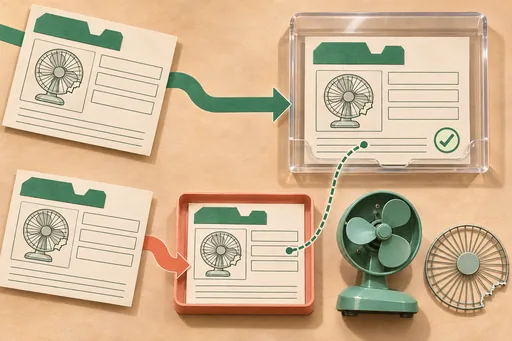
Make two independent comparisons: old source against new source, and approved translation against proposed translation. Each substantive translation edit must follow from a source change, an identified dependency, or a separately approved correction. Refer unexplained stylistic rewriting for review, even when the new sentence sounds convincing.
In the example, check the reader’s decisions at three times. At 18:00 and exactly 19:00, the deadline has not been missed; at 20:00, the instruction to return the set the following day applies. Answers based on the updated English must match those based on the new Russian source. This tests the rule, beyond checking that seven appears.
Then inspect retained blocks: stones, the dryness requirement, and other approved wording should remain intact. The proposed acceptance rule is that every source change is covered, dependent explanations are checked, deletions are completed, and no unexplained replacements remain. Successfully updating this example does not establish the quality of other documents.
Expand the review when context changes
Targeted updating suits documents whose purpose and recognizable block correspondences remain intact. Substantial restructuring, a new audience, or revised terminology can invalidate the previous review boundaries. Expand the scope accordingly, potentially retranslating a section, and approve the editorial decisions again.
Do not preserve wording merely because somebody approved it once. Approval relates to a particular source and context. If the new source is ambiguous or conflicts with a neighboring rule, clarify it with the author first. A model’s explanation cannot replace a missing decision about which condition should actually apply.
Keep the new source revision, final translation, replacement list, and terminology decisions together. Track each language separately as updated, awaiting review, or still corresponding to the previous revision. Before release, inspect the assembled document itself: it must not contain old blocks carried over from an intermediate copy.