First, define what counts as an idea
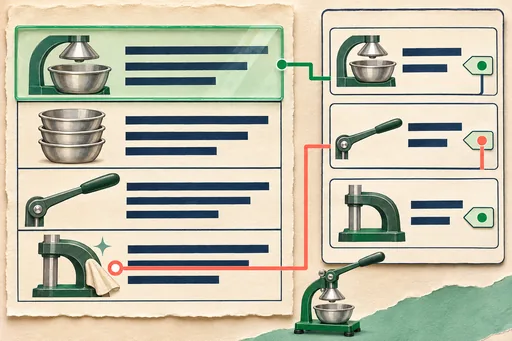
A long list of suggestions does not necessarily offer a broad choice. “Talk about a book,” “give a mini presentation,” and “make a recommendation” may describe the same activity. For practical purposes, count an idea as a way of reaching the goal: what participants do, whom they interact with, and where they obtain relevant information.
In a study by Anil Doshi and Oliver Hauser, participants wrote short stories, sometimes receiving ideas from generative AI. Those stories received higher creativity ratings but were more similar to one another. The finding applies to the study conditions and does not establish that every model behaves identically.
The practical aim of the procedure proposed here is to collect three distinct approaches that can be compared under shared constraints. An attractive name or unusual prop does not, by itself, create a different approach. Examine the actions first, then assess presentation.
Fix the task and its constraints
Fictional example: a book exchange club organizer needs a plan for the first fifteen minutes of a meeting. Twelve adults will attend, with one facilitator. There is a shared table, participants’ books, paper, and pencils. Purchases and phones are excluded. The goal: everyone meets at least one person and learns about a book they would like to read.
Before asking AI, write down two approaches of your own and your concerns. For example, a recommendation round seems too slow, while unstructured introductions might leave someone without a conversation partner. Keep these notes so you can later compare the model’s proposals with your starting directions.
Create a card for each idea: participant action, interaction sequence, materials, preparation, and the proposed route to the goal. You can apply the procedure to a text model’s response in SeaGenera Playground; keep the cards in an ordinary document. Consistent fields make comparison easier.
Request different mechanisms
Example prompt: Suggest six ways to open the meeting under the conditions described. Complete an idea card for each. The approaches should differ in participant actions and how introductions happen. Explain how each differs from the others. Identify unknown conditions separately. Do not choose a winner yet or promise that participants will enjoy the activity.
Examples of different directions: pairs choose books for each other after asking two questions; participants arrange books with notes about reading situations and find conversation partners through shared interests; groups of three jointly select one book for an imaginary trip. These approaches change how people obtain information and make decisions.
If the response repeats itself, specify possible dimensions of variation: individual or joint activity, spoken conversation or written notes, freely chosen partners or assigned pairs. These provide directions for the next request. Keep combinations that preserve the meeting’s goal and available resources.
Check diversity manually
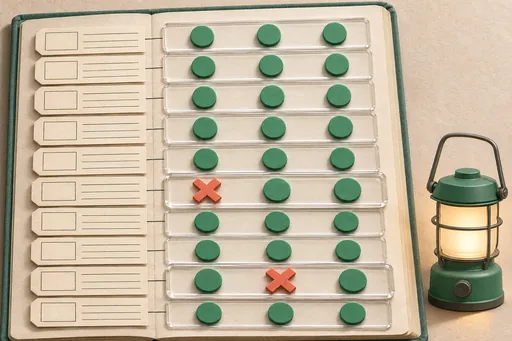
Remove names and promotional descriptions. Rewrite each idea as one sentence beginning with a participant action. Then compare the sentences in pairs: does the action sequence, interaction, or information used to choose a book change? A different name alone does not establish a meaningful difference.
Illustrative review example: six cards fall into three groups—three public recommendations, two versions of choosing a book in pairs, and one silent arrangement activity. Keep a representative from each group for further selection. These numbers are invented to explain the counting procedure.
Ask a colleague to group the same cards independently. When you disagree, discuss the specific actions they consider different. Record the reason for merging or separating proposals. If a description is too vague to support that decision, clarify the scenario first.
Check the remaining approaches for feasibility
Now check each of the three cards against the original conditions. If twelve participants speak for one minute each, the contributions alone take twelve minutes. That leaves three minutes for instructions, transitions, and closing. Compare the model’s estimated duration with this breakdown.
Lay out twelve paper markers representing participants and walk through the scenario step by step. Who starts? Where are the books? Who helps someone without a partner? A tabletop walkthrough helps reveal organizational gaps, but actual conversation lengths require checking with people.
Choose one approach for a trial and record observable success conditions: everyone had a partner, each person named a book that interested them, and the opening finished within fifteen minutes. Afterward, record the conditions met and difficulties encountered. An AI proposal does not itself establish that the goal will be reached.
Preserve the limits of your conclusions
Microsoft’s Copilot in Whiteboard FAQ warns that generated answers can be inaccurate and recommends checking facts before making decisions. In our example, check available materials, table capacity, and any claims about book contents that the model adds.
Diversity within a list does not establish worldwide originality, audience interest, or the superiority of the selected model. Grouping depends on your task: two scenarios may be similar in how people meet but differ substantially in facilitator workload. State which distinction matters for the current decision.
If you need more approaches, identify a specific gap. Example follow-up: Suggest two approaches without presentations to the whole group, preserving the original conditions. Check the new cards for duplicates again. Keep the constraints, three selected approaches, and a trial plan: these are the working outputs of the session.