What should support a correctly formatted response
JSON is useful for transferring AI results into an order record or report. However, correct brackets and a numeric data type do not reveal where a value came from. This method produces a record whose significant fields have traceable evidence, allowing someone to verify the conclusions without asking the model again.
Google’s structured output documentation recommends validating values: a response can conform to a schema while containing semantic errors. Including a quotation field therefore does not, by itself, establish that an extracted value is supported.
Separate acceptance into three questions. Can the response be read as JSON? Do its fields follow the agreed structure? Does the source support every value? We will examine the third question. Keep format validation as a separate step so that successfully parsing a response does not replace checking its content.
Give every supporting passage an address
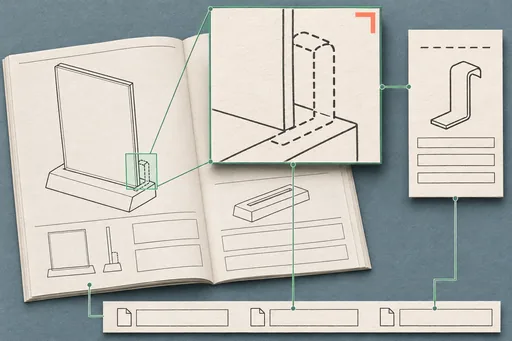
First, freeze a working copy of the document. Assign it an identifier and revision number, and divide the text into labelled blocks. A person or application assigns these labels before processing. The model should select from existing addresses; otherwise, even a plausible paragraph number might be invented.
For each field requiring verification, provide a value and a separate evidence record: document, revision, block, exact passage, and derivation method. The last item distinguishes direct extraction from calculation. Keep multiple supporting passages as separate entries so the reviewer can see every necessary premise.
The W3C Web Annotation Data Model describes locating text through an exact quotation with preceding and following text. Neighbouring words help distinguish repeated phrases. In this proposed workflow, combine that principle with the block address; manual review does not require implementing the entire standard.
Example: four fields from an inspection record
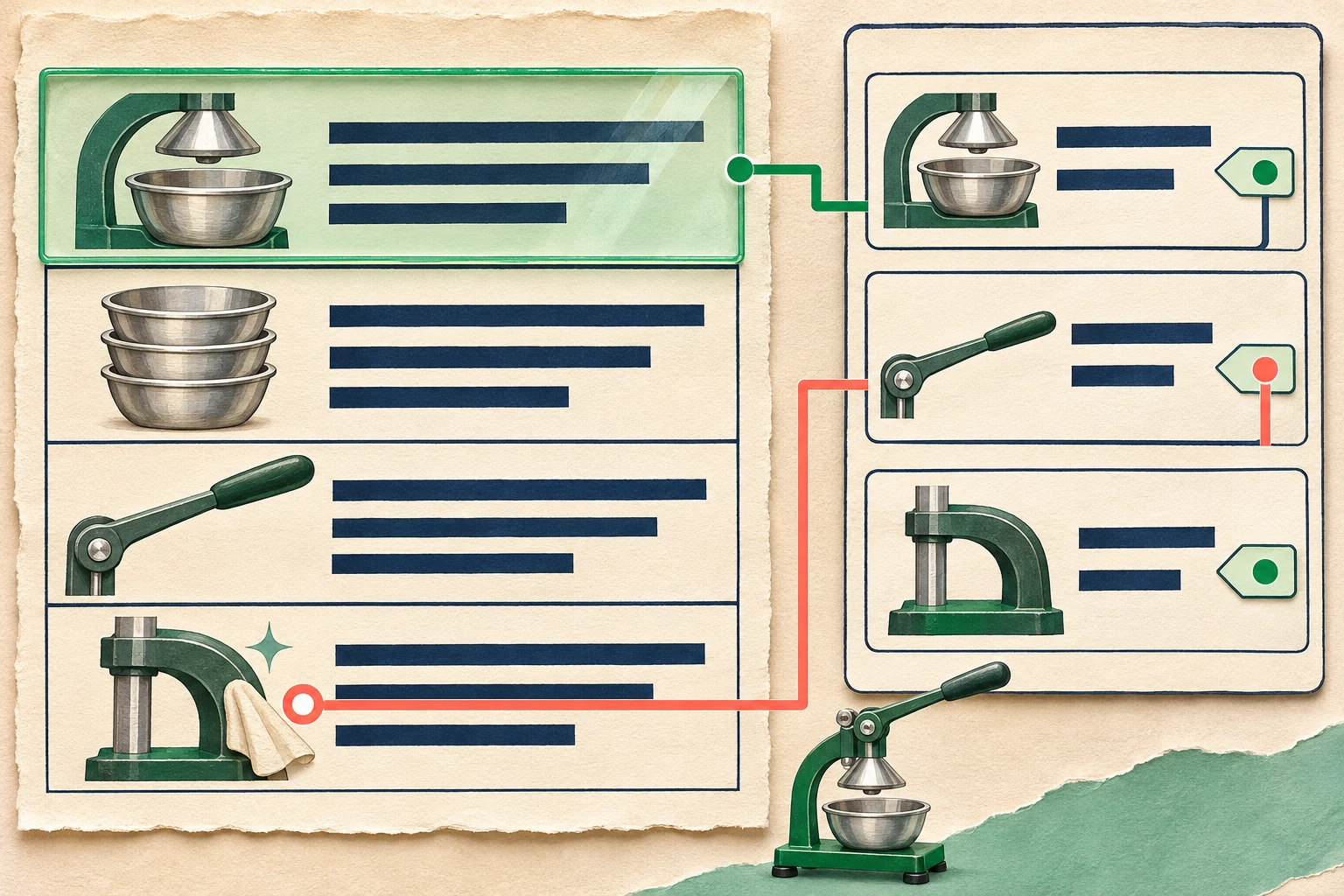
Fictional example: working copy “Inspection-7,” revision 1, contains four blocks about a manual citrus press. B1: “Main bowls: 2 pieces.” B2: “Spare bowls: 2 pieces.” B3: “Body polishing: no issues.” B4: “Lever: sticks when lowered.” Extract the main and spare bowl counts, total bowl count, and whether the lever sticks.
Example instruction to the model: extract the specified fields; preserve a block address and exact quotation for each; give calculated values all their source evidence and a description of the operation; do not add your own words to quotations. The expected main bowl count is 2, with address “Inspection-7, revision 1, B1” and the corresponding complete line.
The expected total is 4, derived by addition, supported by B1 and B2. The number 4 need not appear literally in the record: the reviewer reproduces the calculation from both passages. Lever sticking should be marked present, supported by B4. These are expected records for an illustrative example, rather than results from a model run.
Check that the quotation exists and supports the value
First, open the specified revision and block, then find the complete quotation. Check against the working copy given to the model. If the passage is absent, do not repair it by guessing. If the short phrase “2 pieces” appears twice, require enough context to identify the intended occurrence unambiguously.
After matching the text, check the object and property. The authentic line “Body polishing: no issues” does not support “lever works correctly.” It exists in the document but concerns a different characteristic. Consequently, “quotation found” and “value supported” need separate decisions, even when one person performs both checks.
For a calculated field, repeat the stated operation and check that every premise is present. Then read around the selected lines for qualifications that change their meaning. Store the reviewer’s decision separately from the model’s response. Confidence reported by the model cannot replace locating the passage or verifying the conclusion.
Test the review process with deliberate errors
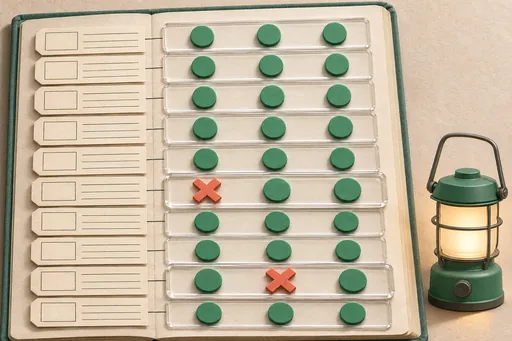
Copy the expected records from the example and introduce one defect per copy. In the first, change the main bowl count inside the quotation to 3: that passage does not exist in the working copy. In the second, retain the authentic quotation containing 2 but set the field value to 3. The address is correct; the conclusion is wrong.
In the third copy, support a working lever with the line about body polishing. In the fourth, retain the total of 4 but remove the evidence from B2. The expected review decisions are to reject the third record for citing an irrelevant property and refer the fourth for clarification because its calculation is incompletely supported.
Add a correct control record with both supporting passages for the total: the review should accept it. This control helps detect a process that simply rejects everything. Record the reason for each decision. These exercises test acceptance rules; they neither measure the model’s error rate nor establish the reliability of future responses.
Applying the method and understanding its limits
According to SeaGenera’s documentation, JSON Schema requires the selected model to support response_format and structured_outputs. Automatic masking is incompatible with JSON modes; a key with mandatory masking will reject such a request. Prepare a de-identified source copy beforehand for this workflow. Organize evidence verification as a separate step.
Start by manually reviewing a small document. An application can later check that addresses exist and quotations match. Assess whether evidence is sufficient using predefined rules, referring disputed cases to a person. Asking the model to check its own answer again does not provide independent confirmation.
The method establishes correspondence between a record and the selected source. An incorrect inspection record remains incorrect even when quoted accurately. Changes to the working copy require checking the anchors again. For scans, also compare critical passages with the page image: an exact match to incorrectly recognized text does not establish what the original says.