Define the endpoint for your timing
An AI draft produced quickly still needs reading, verification, and revision. To test its usefulness, measure human work until the text is accepted. The practical result is a log showing which tasks require less work with a draft and which require more.
Microsoft’s account of its Copilot experiments describes assessing task completion time separately from content quality. Apply this principle to a small editorial evaluation: time savings matter when the finished outputs meet comparable standards. Results from someone else’s study cannot establish savings for your tasks.
For our illustrative example, use 60–90-word customer letters for a desktop globe repair workshop. Each letter must accurately convey completed work, remaining actions, and agreed conditions. Also check whether the customer’s next step is clear. Apply identical requirements to writing from scratch and edited AI drafts.
Allocate eight tasks between two editors
Prepare eight different source records containing enough information to write a letter. Include a completed repair, unfinished work, an agreed exception, and an unconfirmed completion date. Choose cases that reflect actual editorial work; eight tasks is simply the size of this illustrative pilot.
Two editors receive each record: one writes independently, while the other uses an AI draft. Randomly select four records for the first editor’s AI condition; assign the second editor that condition on the remaining four. Each person performs each task only once. Shuffle the records and keep completed letters private until work ends.
The NIST handbook explains that operators and working conditions can affect measurements. Our allocation is a practical adaptation of that idea. Give both editors identical reference materials and formatting rules. For the AI condition, fix the model, instructions, and use of the first response in advance.
Count preparation, verification, and unsuccessful attempts
Start timing when the source record is opened. For AI work, include request preparation, reading the response, fact checking, revisions, and final review. For independent writing, include reading, drafting, and equivalent verification. If a separate reviewer participates, add their work to both conditions.
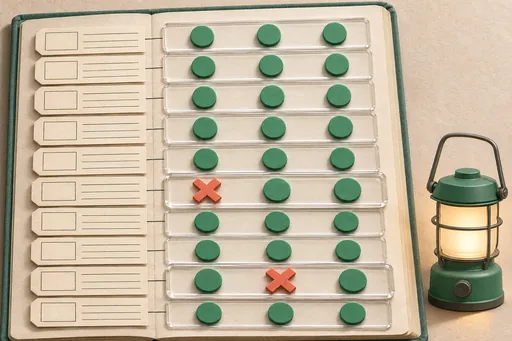
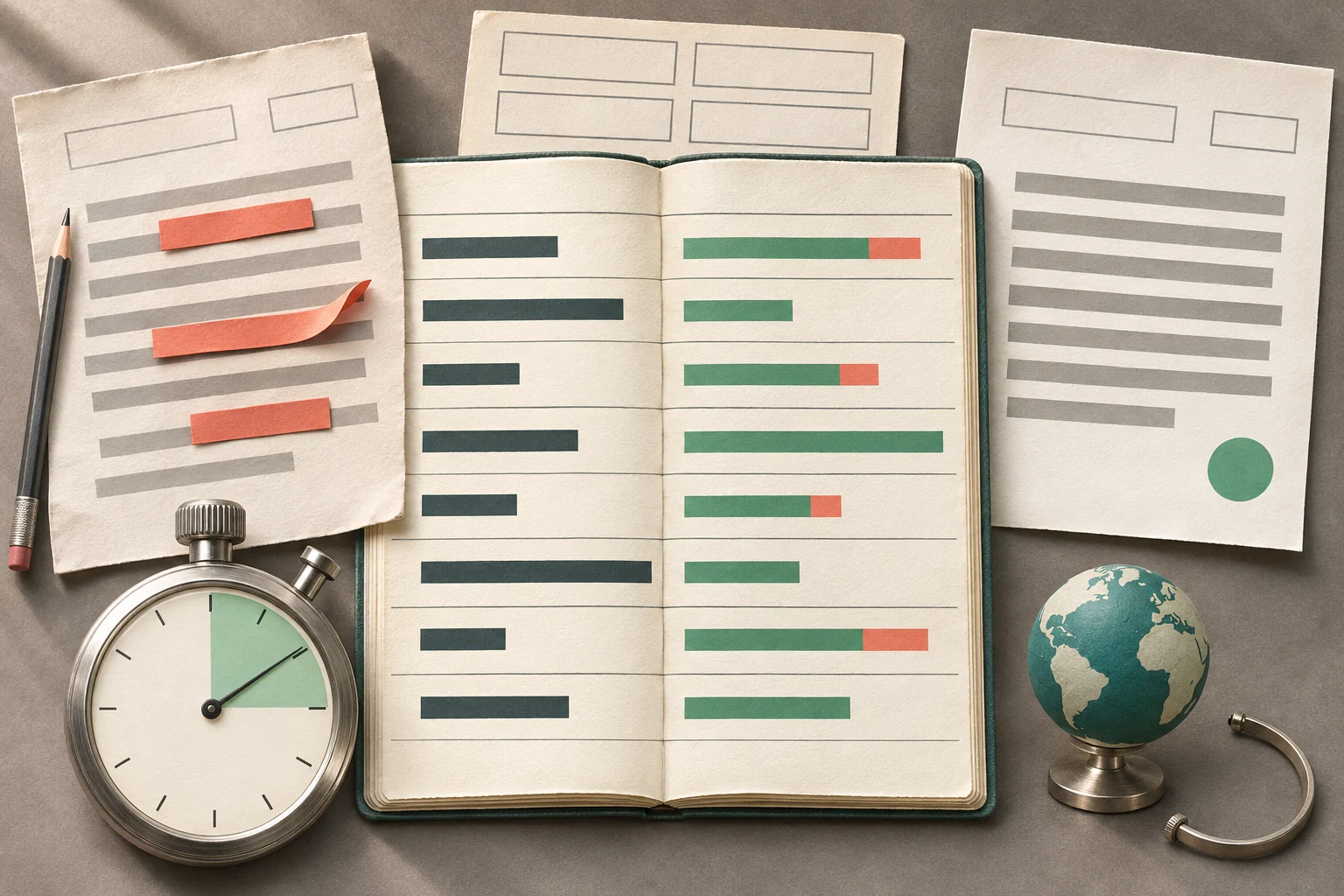
Record the task identifier, editor, condition, minutes per stage, and acceptance status. Sum person-minutes across participants. Record model waiting time separately; monitoring a response also counts as occupied time when necessary. Mark unrelated interruptions and exclude them consistently.
Keep the initial draft and accepted version. If an AI response is discarded and the letter rewritten, all time already spent remains assigned to the AI condition. Record the reason: an incorrect fact, missing condition, unclear action, or formatting. Few changed words do not, by themselves, establish that editing was easy.
Example: a short correction requiring lengthy verification
A fictional source record states that the globe’s axle has been replaced, its meridian ring repair continues, and collection has no agreed date. The task is to explain the order’s status and tell the customer to await confirmation. The record contains all evidence needed for verification.
Example of an incorrect AI draft: “Your globe is ready. You can collect it tomorrow.” Corrected example: “The globe’s axle has been replaced. Repair of the meridian ring continues. We will provide a collection date once work is complete. Please await confirmation before visiting.” This is an excerpt, rather than a complete letter meeting the length requirement.
Illustrative calculation: preparation takes three minutes, verification four, revisions five, and acceptance review two: 14 person-minutes altogether. Suppose the independently written version is accepted in ten. The difference is four minutes, or 40% more human work. These invented figures demonstrate arithmetic; they are not model test results.
Check quality and calculate the result across all tasks
Give a third reviewer the final letters, source records, and requirements. Remove condition and author labels. The reviewer identifies specific violations and accepts texts once those issues are resolved. Add further revision and review time to the corresponding task.
For each source record, compare the full human effort required for its two accepted letters. Then total each condition across eight tasks, retain individual differences, and examine each editor’s results. This reveals whether one unusually fast person or exceptional task accounts for the overall advantage.
Set a time limit and decision rule beforehand. For example, continue the pilot if AI work requires less total effort and every letter meets the shared requirements. Retain unfinished tasks and their consumed time in the report. If any remain unfinished, postpone conclusions about savings through to accepted output.
Keep conclusions within the evaluation’s limits
Time Is Effort examines subsequent human editing time when evaluating English grammar correction tools. It supports attention to revision costs, including deciding whether a correction is necessary. Its findings concern a specific task; efficiency for Russian customer letters requires separate measurement.
Eight tasks and two editors provide preliminary evidence for the selected workflow. Experience, source complexity, and familiarity with instructions can change results. After changing the request, repeat the evaluation with new records. Separately log the work of developing shared instructions and training participants, since these costs affect the workflow’s eventual payoff.
Saved responses from SeaGenera’s text Playground can be used to measure subsequent verification and editing. Keep the timing log in your own document. If request preparation time is unknown, describe the result as editing effort. Establishing total savings also requires measured preparation time; recollection cannot supply an exact measurement.