First define what counts as an action item
A useful meeting outcome should answer who agreed to do exactly what, and under which conditions. The phrase “we could update the cover” does not assign any work by itself. Turning it into a task for a designer makes the list tidier, but changes what participants agreed.
For this method, divide the output into four groups: action items, decisions, suggestions, and open questions. Count an action as assigned when someone commits to it or the meeting explicitly agrees on it. A decision can establish a working rule without needing a separate owner: keeping the existing page format, for example.
Microsoft’s FAQ about Copilot in Teams explains that concise summaries may not cover everything discussed. Checking action items separately from the general recap is therefore useful. The following is an independently developed method for doing that.
Prepare notes you can trace back to
Assemble one working source and preserve it without editorial paraphrasing. Include the meeting date, if known, and the participants. Do not replace “I’ll try” with “I’ll do it,” or remove negatives and clarifications: these details help establish whether a commitment was made.
Give paragraphs short identifiers such as A, B, and C. Preserve timestamps if they already exist. These markers let you return to a particular part of the discussion. When the speaker is unknown, say so: adjacent remarks do not prove that the same person made them.
If you use several sections of a long meeting, preserve their overall order and identifiers. Check the final remarks on each topic: an earlier assignment may have been cancelled. Correct transcription errors against the recording first; otherwise, reviewing the output means checking against incorrect words.
Request extraction under explicit rules
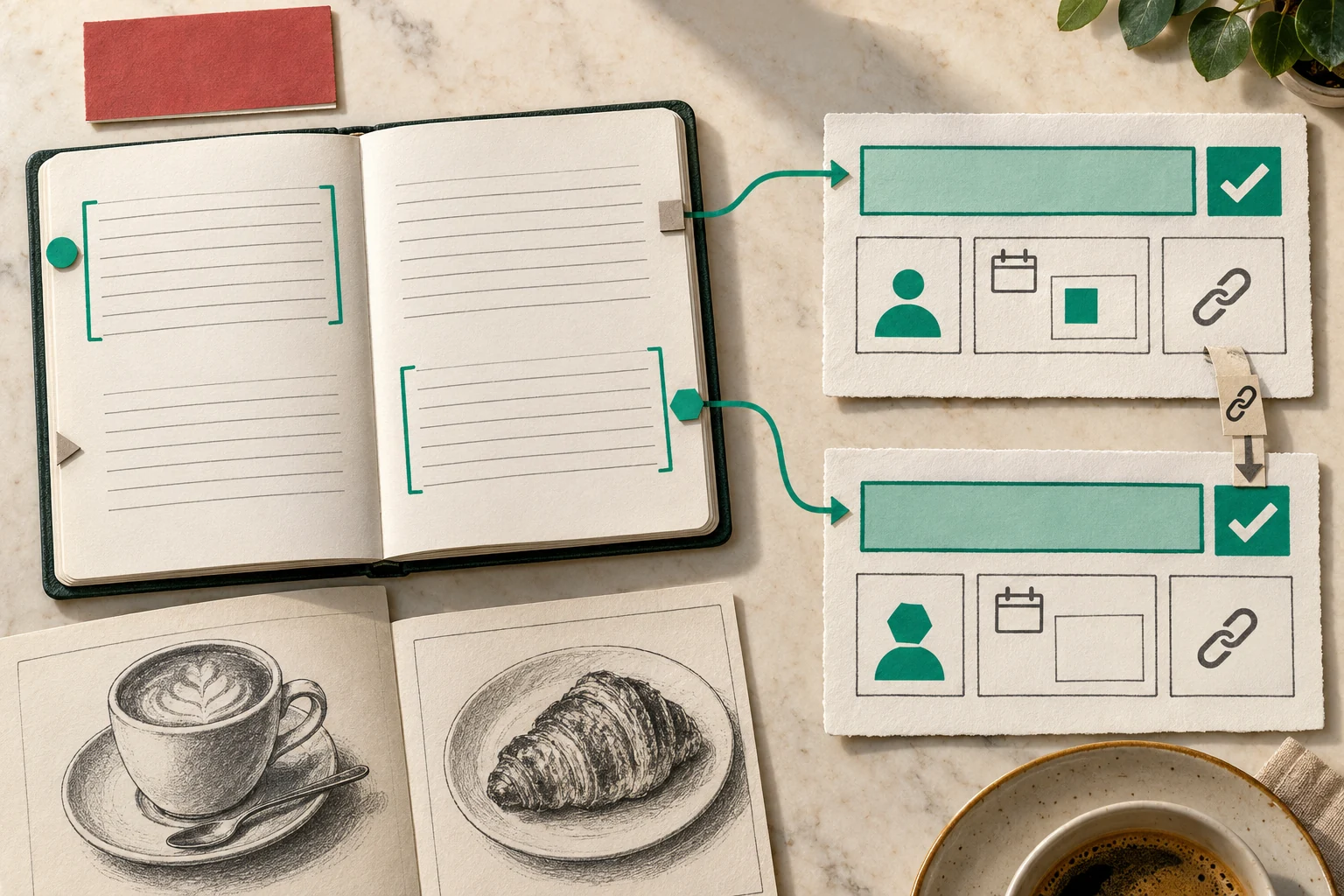
For each action item, request the action, owner, deadline, starting condition, and source identifier. Add a short supporting remark. Do not demand a value in every field at any cost: “not specified” is better than an invented date. Also preserve the original wording of relative deadlines.
Example prompt: “Analyze the notes using only their contents. Separate action items, decisions, suggestions, and open questions. For action items, give the action, owner, deadline, starting condition, and supporting passage. Do not assign owners based on job titles or adjacent remarks. Explicitly mark missing information. Do not turn a possibility, question, or rejected idea into a commitment. If an assignment was later cancelled, show that separately.”
Anthropic’s Reduce hallucinations guide recommends allowing the model to acknowledge missing information and connecting claims to supporting passages. Here, those techniques help make the draft auditable. You must still check the supporting remark manually: the model may misunderstand what it means.
Work through a fictional example
Illustrative example: a team is discussing a café’s new menu, and the notes contain no meeting date. Passage A: Irina says, “I’ll send the approved dish list tomorrow by 16:00.” Passage B: Pavel replies, “Once I receive the list, I’ll make a sample spread; I’ll confirm the deadline later.” Passage C: the meeting host says, “We’re only discussing the red cover for now.” Passage D: the host adds, “We’ve decided to keep the page format. We haven’t chosen who will check the prices yet.”
The expected extraction contains two action items. Irina will send the approved dish list; the deadline remains “tomorrow by 16:00,” the calendar date is unknown, and A is the source. Pavel will prepare a sample spread after receiving the list; no deadline has been agreed, and B is the source. Shortening the wording must preserve his starting condition.
Keeping the page format belongs under decisions, while the red cover belongs under suggestions. Checking prices remains an open question about ownership. The meeting date and Pavel’s deadline need clarification. This is the expected outcome of an illustrative example, not a model test report or an account of an actual meeting.
Check the list in both directions
First, trace each action item back to the source. Does it support the action and owner? Have negatives, conditions, and qualifications survived? Find both the cited remark and the subsequent discussion of that topic. An early commitment may have been withdrawn, or a tentative deadline replaced.
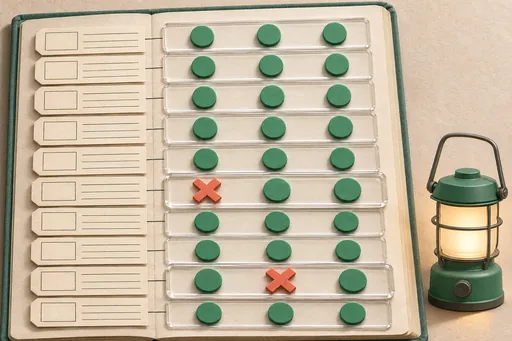
Next, read the source from beginning to end and find agreements missing from the list. This catches omissions that cannot be spotted by reading a polished draft alone. Compare individual commitments rather than row counts: one remark can contain several separate actions.
In the illustrative example, check particularly for three errors: assigning the red cover to Pavel, inventing a calendar date, and losing the condition that the list must arrive first. If you find an error, revise the prompt rule and compare the changed output with the source again.
Confirm unresolved details before work starts
Give participants a short draft with specific questions. In the example, Irina needs to clarify the calendar date for sending the list, Pavel needs to clarify the spread’s deadline, and the host needs to identify the price checker. Do not ask the model to fill these gaps by assuming who normally does what.
Move items into the working list once their action, owner, and necessary conditions are confirmed. Keep an unknown deadline only if your workflow permits tasks without deadlines. Mark new clarifications as responses received after the meeting: they should not appear to belong to the original record.
The method is limited by the quality of the notes and how explicitly agreements were stated. It cannot establish who had authority to assign work or confirm an absent participant’s agreement. Keep the reviewed list with its source so that each item’s basis can be recovered when a decision changes.