Check what the text presents as established
When AI turns an internal note into a customer message, every object and event can remain while the meaning changes. “The technician suspects deformation” becomes “the part is deformed.” The reader receives a more certain claim, although no further inspection occurred. Each claim’s evidential status needs checking.
NIST AI 600-1 describes the risk of confidently presented incorrect information: convincing delivery can encourage users to believe it and act on it. This suggests a practical editorial question: what evidence allows the finished text to sound as certain as it does?
The study Aligning Uncertainty treats preservation of source uncertainty as a separate dimension of automatic summary quality. The following independent editorial protocol connects each important claim to its evidence, the person making the assessment, and acceptable wording.
Create a claim record before generation
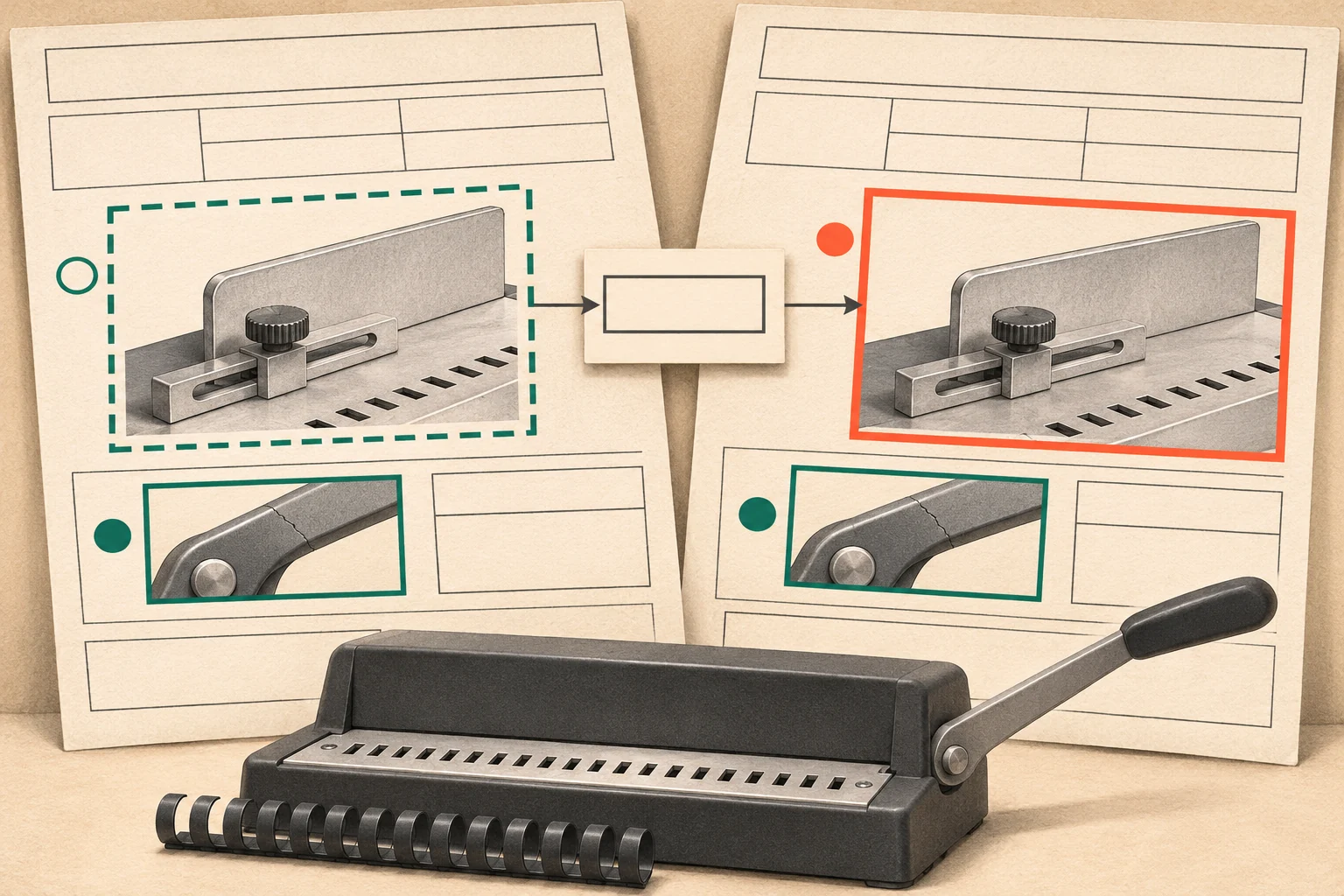
Fictional example: a workshop is preparing a message for the owner of a manual binding machine. The source note says: “Inspection revealed a crack in the lever. The technician’s preliminary assessment suggests the guide is also bent; this has not been checked. The supplier suspects the replacement guide will fit, but compatibility is unconfirmed.” These three claims have different foundations.
Give each claim its own record: content, exact supporting passage, who supplied the information, evidential status, and acceptable paraphrase. The crack is supported by inspection. Deformation rests on the technician’s preliminary assessment. Compatibility rests on the supplier’s tentative assessment, with verification explicitly unfinished.
Do not convert words such as “possibly” and “probably” into invented percentages. For this task, preserving the original certainty and source of the assessment is more useful. If a qualification is ambiguous, retain similar wording and flag the question for the note’s author. Avoid silently strengthening or weakening it.
Specify how qualifications should carry over
You can set this task as an ordinary text request in SeaGenera’s Playground. Provide the source note and requirements for the message. Define the essential claims beforehand: in this example, the customer needs information about the crack, suspected deformation, and unconfirmed compatibility.
Example request: “Prepare a short customer message from the note. Preserve all three claims, their evidential status, and attribution to the technician or supplier. Present preliminary assessments as preliminary. Add no conclusions about necessary repairs. If brevity would remove a qualification, keep the sentence longer.”
A qualification must apply to the intended claim. “The lever may have a crack, the guide is bent, and the replacement will fit” weakens the observed defect and leaves certainty about the other information unclear. Separate sentences where their supporting evidence differs. This also makes subsequent comparison easier.
Compare claims and attribution
Read the finished message claim by claim. Ask what the reader now considers established, who is responsible for that assessment, and what verification has already happened. Then locate the corresponding record. Matching the part’s name is insufficient: content, evidential status, and the assessor’s identity, where supplied, must also match.
Example of an incorrect rewrite: “The lever has a crack, the guide is bent, and the replacement guide is compatible.” All three topics appear. However, two tentative assessments have become established findings, while the supplier and technician have disappeared as their sources. Return this text for correction.
Corrected example: “Inspection found a crack in the lever. The technician tentatively suspects deformation of the guide. The supplier suspects the replacement guide will fit; compatibility remains unconfirmed.” A final blanket note saying “information is preliminary” cannot replace precise qualifications: it could also cast doubt on the crack already observed.
Test the review itself
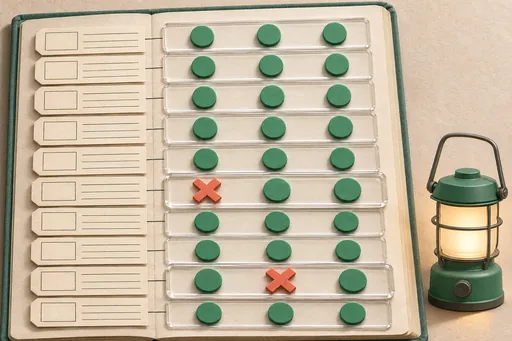
Manually prepare four diagnostic rewrites. In the first, make suspected deformation an established finding. In the second, assert compatibility confidently. In the third, weaken the inspection finding to “there may be a crack.” Make the fourth a faithful paraphrase with different wording. Give a colleague the source and claim record without highlighting errors. The expected outcome is rejection of the first three and acceptance of the fourth.
Illustrative calculation: a collection of messages retains all 12 required claims, but two become more certain than their sources and one becomes less certain. Evidential status is preserved correctly in nine of twelve cases, or 75%. These figures demonstrate the calculation and do not report a test of any model.
Record strengthening and weakening separately because they require different corrections. A customer message could have this acceptance rule: every required claim appears, no tentative assessment is presented as confirmed, and inspection findings retain their certainty. Record missing claims separately rather than hiding them within the certainty score.
Check the correction and the limits of your conclusion
After revision, compare the whole paragraph, heading, and short message card again. Fixing one sentence does not guarantee that categorical wording has disappeared elsewhere. Pay particular attention to the opening line: it might announce confirmed compatibility while the body still describes a tentative assessment.
This review establishes faithful transmission of the source. It does not establish actual deformation or replacement compatibility; those require appropriate evidence. An error made by the source author can survive an otherwise faithful rewrite. One successful example also cannot show that a model always handles qualifications correctly.
Keep your own copy of the source with its version identified, the claim record, and the accepted text. On subsequent documents, check other expressions of tentativeness and multiple claims within one sentence. The practical result is a message that lets readers distinguish observations from tentative assessments and identify whose assessment still needs confirmation.