Define what the listener needs to hear
Before reviewing AI narration, list places where incorrect reading would change the message: names, dates, abbreviations, measurements, and codes. Your practical deliverable is a reference sheet of expected readings for checking the recording. It works for a short announcement or an audio guide.
The W3C SSML 1.1 specification describes converting written content into spoken forms and notes the ambiguity involved. Pronouncing the resulting words is a separate concern. First establish what the notation means, then agree how it should sound: correcting stress cannot fix a misinterpreted date.
A text model can identify potentially ambiguous items and extract their surrounding sentences. Ask it to preserve the original spelling and flag questions for an editor. Then review the original yourself: the list is a starting point, while someone familiar with the content makes the final reading decisions.
Create a reference sheet of expected readings
For each item, record the original notation, meaning, expected reading, basis for the decision, and location in the text. A date might be confirmed by the organizer; a surname by its owner. Keep unconfirmed questions open so that a guess does not become the reference.
Distinguish quantities from sequences of characters. An equipment code may require every digit to be spoken, including leading zeros. A measurement must preserve its value and unit. For an abbreviation, decide whether the audience needs individual letter names, a conventional word, or the full expression.
An editor’s reference can contain a stress mark, a plain-language explanation, or a link to an approved speech sample. These are review notes. Before placing them in the narration input, establish which pronunciation controls the selected model supports: editorial notation alone does not establish that support.
Illustrative example: a photography club announcement
Illustrative fictional example: a Russian announcement schedules a photography club meeting for 04.06 at 18:30. Curator Levina will show ИК images; visitors should stand 1,5 м from an exhibit. The registration code is 007. The organizer has confirmed 4 June. The following readings are targets, not generation results.
The expected spoken meanings are: the fourth of June, eighteen thirty, infrared images, one and a half metres, and zero zero seven. Preserve the final item as a three-position code. Expand ИК into the Russian expression for infrared because visitors may be unfamiliar with the abbreviation.
In this example, the agreed surname pronunciation is «Ле́вина», with stress on the first syllable. This applies only to the fictional example and cannot be generalized to everyone with that surname. There are six items to check, each requiring an expected reading even when several appear in one sentence.
Prepare a version of the text for narration
Make a separate working copy of the script. Expand the abbreviation and write the date, time, measurement, and code in words, using the appropriate grammatical forms. Compare every replacement with the reference sheet. Preserve the written original separately to keep synthesis-specific spelling out of the publication.
Microsoft Speech documentation describes pronunciation controls through SSML, including phonetic notation and custom lexicons. Phoneme and lexicon support must be checked for the relevant language locale. These tools help when ordinary spelling is insufficient, but their availability must be established for the particular synthesis method.
Google Cloud Text-to-Speech documentation explicitly states that it supports a subset of SSML elements. SeaGenera’s public documentation does not confirm universal SSML or pronunciation dictionary support. Check the model card and available settings first. For plain-text input, use the agreed word forms; test phonetic annotations separately.
Check the recording without showing the script
First give a listener the recording without the script or reference sheet. Ask them to identify the date, time, distance, and code, repeat the surname aloud, and explain what will be shown. This checks what information they receive from sound alone, without assistance from familiar text.
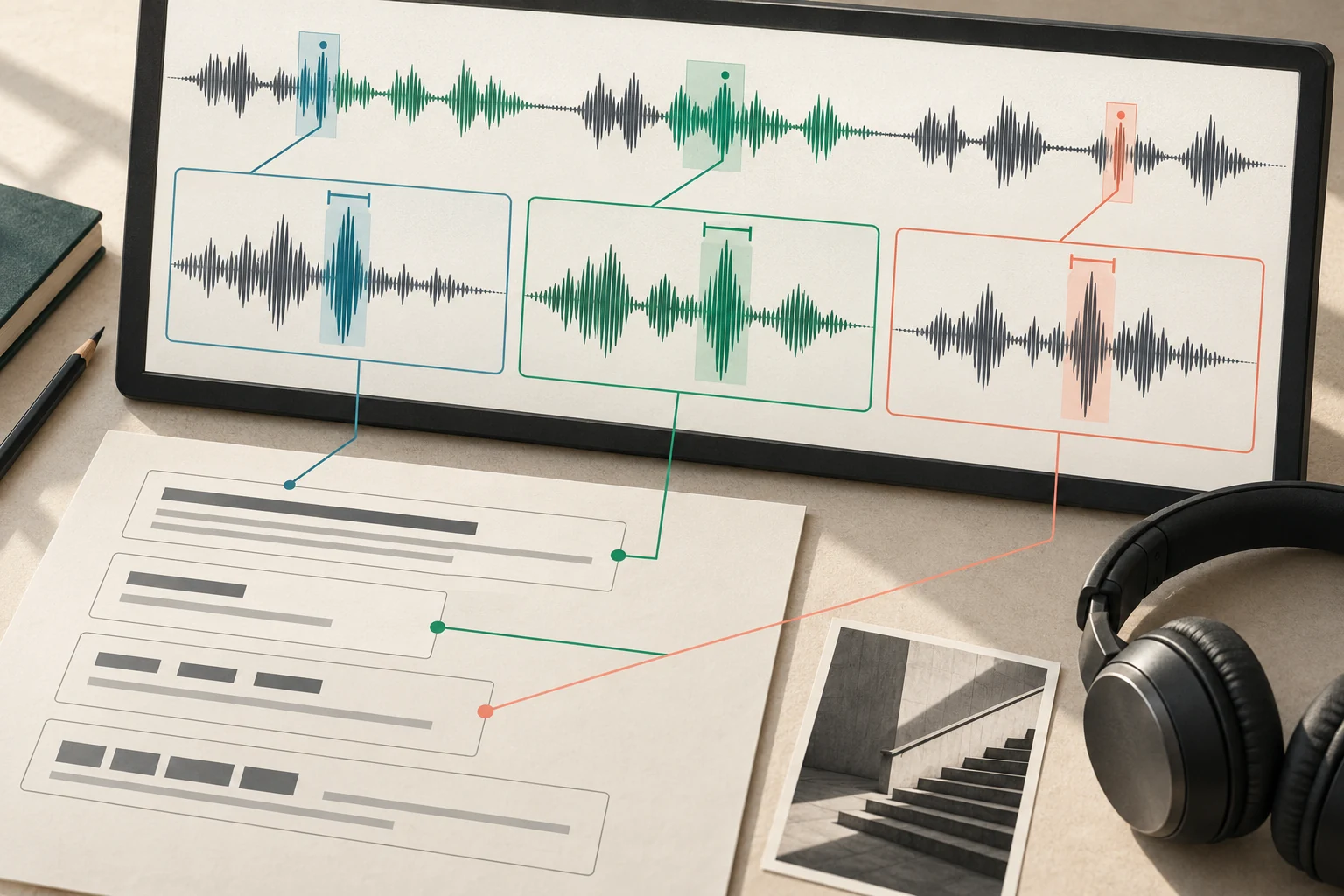
Then listen alongside the reference sheet. Record the actual reading and location of each discrepancy. Check every occurrence of repeated important words: success at the beginning does not verify later instances. An automatic transcript can help locate passages; assess stress and the clarity of individual digits by listening.
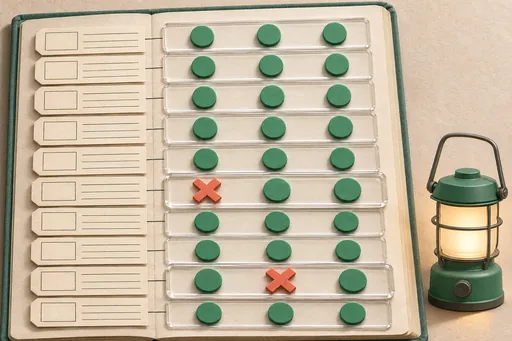
Set the acceptance rule beforehand: all six example items must be conveyed correctly every time they occur. An incorrect date, missing zero, or unapproved stress requires correction. Record comments about voice pleasantness separately. If the listener is uncertain, leave the item marked as unverified until another listening check.
Correct one item at a time and retain the limitations
When correcting an item, change one representation at a time and preserve other settings where the tool allows. Check the new version’s problem area and neighboring sentence. This helps reveal side effects: the word becomes clearer, but an unwanted pause appears nearby or a number is read differently.
Repeat important checks after changing the voice, language, or surrounding text. The reference sheet records an editorial target; it cannot guarantee identical output from every synthesis attempt. Names and specialist terms may require a knowledgeable listener. Ambiguous source information needs clarification from the person responsible for it.
Keep the approved script, pronunciation reference, and reviewed audio version together. List acceptable pronunciation alternatives beforehand. This method supports acceptance of a particular recording against particular requirements. It does not establish that the entire model is error-free or replace a separate assessment of how natural the speech sounds.