What a smaller size offers
Small language models have relatively few learned parameters. Size alone does not tell you whether a model can handle your text. A more practical assignment is a bounded operation: for example, rewriting existing instructions more clearly while preserving every rule.
Compactness can help with deployment: the Phi-3 technical report describes running Phi-3-mini, with 3.8 billion parameters, on a phone. This is a particular implementation. It does not mean every small model runs on every device, or that a cloud request runs locally.
For cloud services, smaller size also guarantees neither a lower price nor a shorter wait. This method measures usefulness by the editing still required after the draft. The goal is clear instructions that lead readers to the same decisions as the original.
First define the editing boundaries
Start with one short passage and identify the audience: for example, someone collecting a learning kit for the first time. Set one goal: explain collection. Asking simultaneously for shortening, a different tone, translation, and new rules makes errors harder to diagnose.
Before approaching the model, record the conditions that must remain unchanged: who acts, what is required beforehand, when an action is permitted, and which exceptions apply. This is the editor’s working checklist. Do not ask the model to decide which restrictions deserve preservation.
W3C WAI offers useful presentation guidance: familiar words, short sentences, small blocks, and unambiguous meaning. This is supplemental accessibility guidance, not a promise of standards compliance. Set a length limit after preserving the conditions: an excessively tight limit can cause their omission.
Example: collecting a learning kit
Illustrative source text: “Kits are issued on Tuesdays and Thursdays from 16:00 to 19:00 after booking confirmation. A representative collects the kit using the booking number. Any rescheduling must be agreed at least two working days in advance. For group bookings, only the coordinator may arrange rescheduling.”
Example model assignment: “Rewrite these instructions for someone collecting a kit for the first time. Use everyday words and a separate sentence for each action. Preserve the schedule, confirmation, representative collection condition, rescheduling deadline, and group restriction. Do not add new conditions.”
An illustrative editorial rewrite, not the result of a model test: “Get your booking confirmation. You can collect the kit on Tuesday or Thursday from 16:00 to 19:00. If your representative comes, they must provide the booking number. Arrange any rescheduling at least two working days in advance. For group bookings, only the coordinator may do this.”
Confirmation becomes a separate action, while the group exception stays beside rescheduling. If the model replaces “working days” with “days,” or extends the booking number requirement to every recipient, it changes the original rule. A pleasant tone does not compensate for that error.
Check the reader’s actions
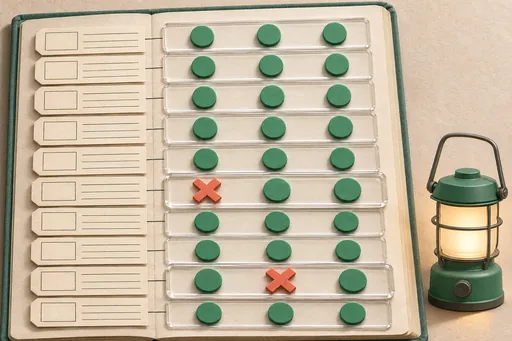
Compare the draft with your conditions checklist. Locate each condition precisely in the rewrite. Then check in reverse: every new requirement must have a basis in the original. This catches omissions and plausible additions, such as requesting an identity document that the original never required.
Next, check readers’ actions. In our example, ask whether Wednesday collection is allowed, what a representative needs, whether group collection can be rescheduled without the coordinator, and whether two calendar days suffice. Expected answers: no; the booking number; no; not necessarily, working days are required. Both versions should produce identical answers. These scenarios were designed for this illustrative example.
Ask a colleague to answer using only the simplified text, then compare their answers with the original. If a rule needs verbal explanation, revise its wording. Model self-checking can provide suggestions, but base the final decision on the source document and the reader’s answers.
When to revise and when to stop
The SmolLM2-1.7B-Instruct model card lists text rewriting, but also notes its primarily English focus and possible factual and logical errors. These are limitations of that particular model. An English demonstration does not establish equally successful handling of Russian instructions.
If only one phrase is cumbersome, request a revision of that phrase and include the original condition. If an exception disappeared, restore it explicitly and recheck the entire passage: a local edit may have changed a neighbouring sentence. Keep the original separate from the draft for comparison.
Stop rewriting when simplification requires interpreting an unclear rule, reconciling contradictory sections, or inventing a missing deadline. First obtain clarification from the instruction’s author. Increasing model size does not make an ambiguous source rule unambiguous.
How to tell whether this helps
For recurring work, retain the original, conditions checklist, assignment, and editor-approved version. You can submit this text task in SeaGenera’s Playground; check the catalogue for the required model. This method does not assume that the website automatically checks meaning.
On the next document, record which corrections were needed: restoring a condition, removing an addition, or adjusting style only. Separately record the time spent obtaining and checking the draft. This is a working log, not evidence of quality across all future instructions.
Keep using the model for passages where final review remains manageable and the result helps the editor. New languages, lengthy dependencies, and unusual exceptions require fresh assessment. If correction and checking take longer than manual editing, narrow the assignment or edit the text yourself.