Define what needs confirmation
A bibliography produced by AI can look convincing: familiar surnames, a relevant title, a year, and a link. Check these elements together. A working address establishes that some page is accessible. Accepting the reference requires confirming that its title, authors, and remaining details belong to one specific work.
A study published in Findings of EACL 2024 examined hallucinated references to books and articles. Its observations included changing author lists when models were questioned repeatedly about invented works. Instability can flag a reference for investigation. Agreement between several model answers does not replace an accessible primary source.
Define the deliverable first: for example, a list of research papers for an editorial brief, with every entry unambiguously findable. Check publication existence, bibliographic accuracy, and support for your claim separately. This procedure primarily addresses the first two tasks.
Create a record for each reference
Copy the proposed references into a working register, preserving each original entry. Separate the original-language title, authors in their stated order, year, publication venue, pages or article number, identifier, and address. Leave additional fields for the primary source found, version checked, discrepancies, and decision.
Example instruction for AI: separate these references into the specified fields; leave missing information unknown; add nothing from memory. Check that breakdown against the original answer too. At this stage, the model helps organize verification, while the editor retains responsibility for deciding whether the reference matches.
Define clear statuses in advance: confirmed, correction required, and unresolved. Confirmation means that the checked details match one work. Correction requires a documented reason and repair. Unresolved preserves uncertainty. Leave an unconfirmed DOI empty: requiring an identifier must never become a reason to invent a missing value.
Find the work through two routes
First, open the proposed link or the page identified by its identifier. Compare the title, complete author list, and publication details with your record. Then find the work independently using its title and an author's surname. Check whether that route reaches the same publication. This can expose an identifier belonging elsewhere.
If the exact title produces no match, try a distinctive phrase with the surname, then search within the claimed proceedings or journal. Record the variants checked. Several unsuccessful searches leave the reference unresolved: a typo, translated title, or limited availability may explain the problem. They do not establish that the work never existed.
Open the document itself and inspect its title-page information. ACL Anthology explicitly treats the PDF as authoritative when correcting title, abstract, and author metadata. That is the archive's own rule; investigate the relevant publisher's correction process when discrepancies occur elsewhere.
Keep one version's details together
Build the final entry from a consistent set: the selected publication page, its corresponding document, and version information. Avoid automatically combining a year from one record, a title from another, and pages from a third. Establish a documented publication history before connecting closely related documents.
The arXiv documentation explains that an address without a version number displays the latest version, while a complete identifier can specify one version. It also notes that titles and author lists may change between versions. Record exactly which version you opened alongside its verified bibliographic details.
When you discover another version, revisit the brief's purpose and choose deliberately. Check the publication page for correction notices and record their implications for your task. Retain the verification date. It will help establish which document and information were available to the reviewer at that time.
Example: a title and identifier from different papers
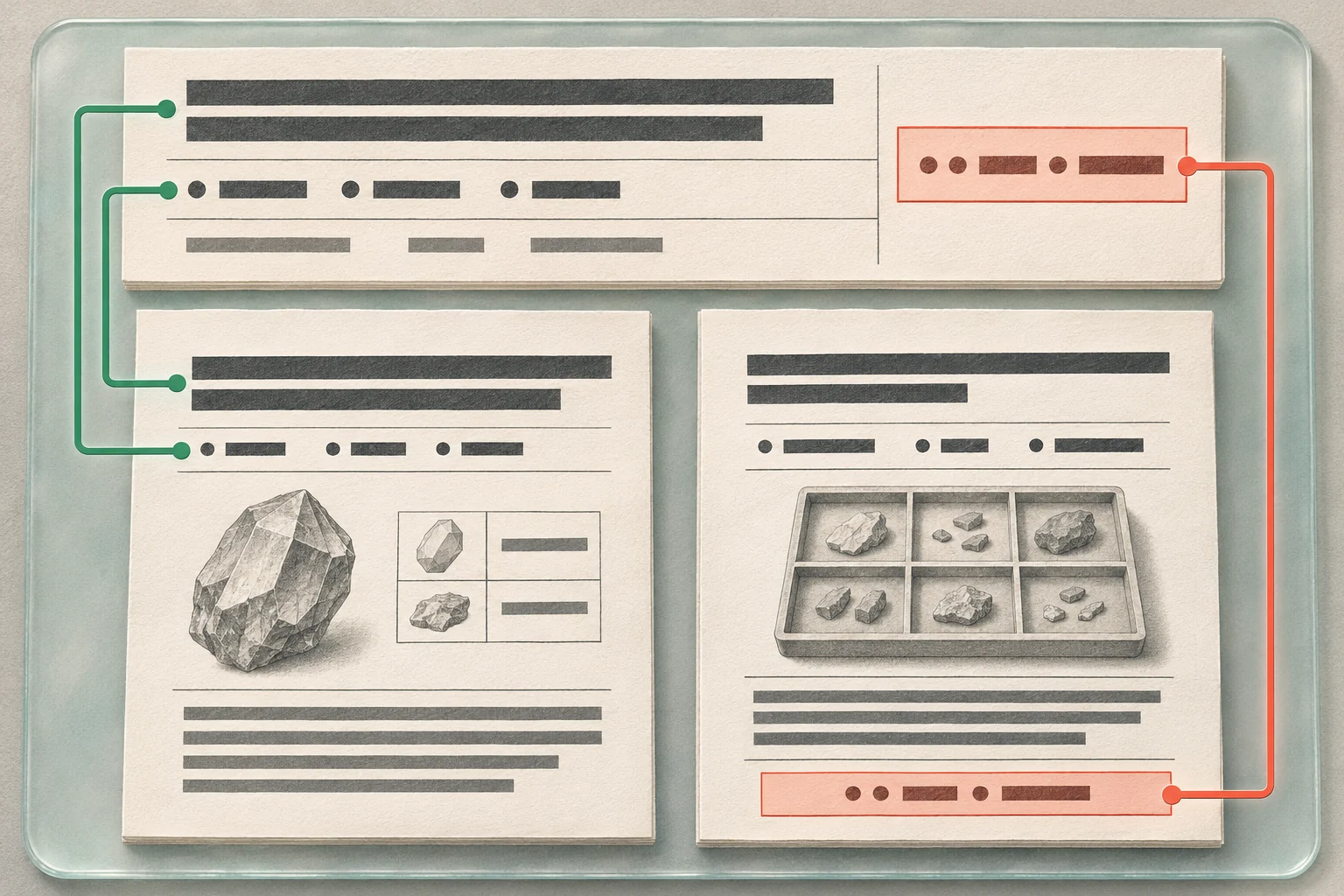
Consider a fictional example. An editor is preparing a brief about recognizing handwritten mineral specimen cards. AI proposes a paper called “Recognizing Handwritten Collection Labels,” with two authors and an identifier. All titles and circumstances in this example are invented to explain the procedure; no actual bibliographic identifiers are provided.
Following the proposed identifier opens a study about sorting specimens from photographs. Searching the title separately finds a paper about handwritten labels, but it has three authors. The working link and relevant title each appear plausible individually, while the complete reference combines details from different works.
The editor records the mixed details, opens the paper about labels, and verifies its authors and publication information. If that is the work needed for the brief, the entire entry is replaced, preserving the reason for correction. If the intended reference cannot be established, it remains unresolved and is excluded from the finished bibliography.
Test the procedure and respect its limits
Test your verification process using copies of confirmed entries. For example, substitute another paper's identifier, replace one author, and change the year. These are deliberate diagnostic errors, not reported model test results. For each, check whether the discrepancy was detected and the decision supported by specific evidence.
Include a control without a substantive error: change punctuation or surname formatting while preserving the author's unambiguous identity. That reference should pass after formatting normalization. If the procedure rejects every character difference, refine the rules: formatting and publication information require different comparisons.
Before handing over the bibliography, reopen the final addresses and compare them with the completed entries. This method requires manual work and can leave inaccessible sources unresolved. A confirmed bibliography also establishes neither research quality nor support for a particular conclusion: those require separately reading the relevant parts of the work.


