Why inspect results after reranking
VoyageAI by MongoDB: rerank-3-lite is useful when search has already found documents, but helpful information is buried among similar passages. For example, a rental service assistant needs to show equipment return requirements. Several packaging excerpts can fill a short result list, leaving photograph requirements outside it.
Voyage AI’s official repository specifically lists rerank-3-lite among its rerankers. The developer describes their task as scoring how well documents match a query. These scores help reorder retrieved material. Initial retrieval and preparation of the final answer remain separate stages.
The practical outcome of this method is a set of passages where each contributes necessary information. Here, redundancy removal follows application rules after reranking. Everything below uses fictional documents and hypothetical result orders: no paid requests or measurements of the model’s quality were performed.
Prepare an example with two information needs
Fictional example: a rental service supplies light pads for tracing drawings. A customer asks: “How should I package the light pad for return, and which photographs should I include?” Before assessing results, record two needs: find the packaging procedure and find the photograph list. Both require documentary support.
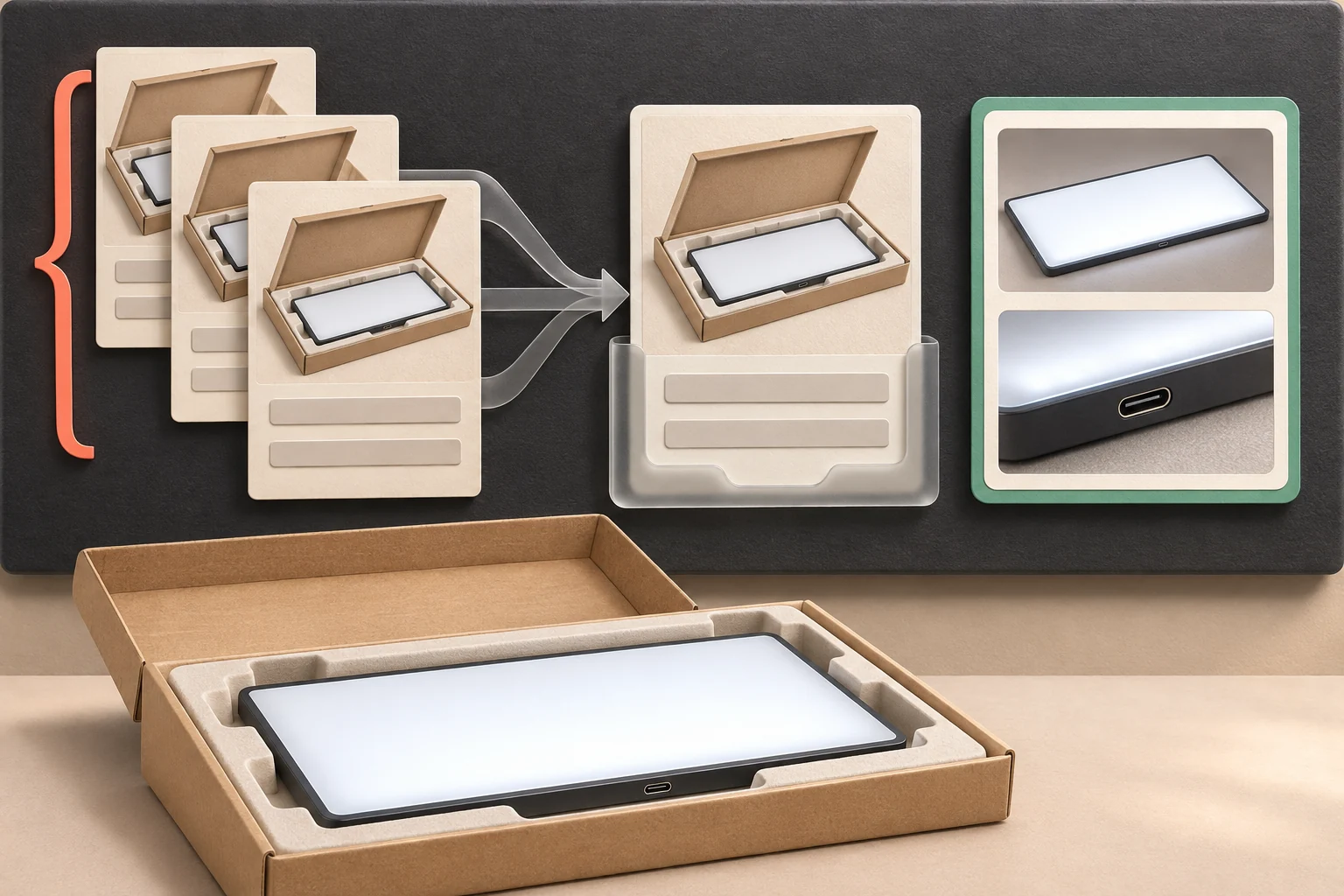
Prepare five illustrative candidates. Passages A1, A2, and A3 partly overlap and repeat an instruction to place the pad in a protective insert. Passage B1, from an appendix, requires photographs of the front surface and connector. Passage C1 describes returning a projector. These are example contents, not actual equipment handling instructions.
For each candidate, retain its identifier, source, section, and exact text. Separately record what information it contributes. Sharing a source does not establish redundancy: the photograph appendix may belong to the same guidance document while answering a different part of the question.
Requests and settings available in SeaGenera
SeaGenera provides this model through /v1/rerank. Supply model, query, documents, and optional top_n. Up to 1,000 texts or text objects are accepted; the response contains results with indices and scores, without streaming. This mode is absent from Playground. Temperature and reasoning settings are not documented for this method.
In the published specification for Voyage’s own API, the number of returned results is called top_k. SeaGenera uses top_n. This illustrates an interface difference: provider parameter names cannot automatically be transferred into a SeaGenera request.
The first example query is the customer’s complete original question. A second example is: “Find information about packaging a light pad for return and the required photographs.” Compare formulations using identical candidates. For this illustrative set, set top_n to five so every passage remains visible before selection and available for inspection.
Select passages by the information they add
After reranking, inspect candidates from top to bottom. Keep the first suitable passage, then examine each subsequent contribution. Skip a passage that merely repeats an instruction already represented. Keep one that adds a necessary condition. Maintain two adjacent fields: “packaging supported” and “photographs supported.”
Suppose the hypothetical order is A2, A1, A3, B1, C1. This is an illustration, not a model response. Selecting the first three retains only packaging information. Selection based on additional content keeps A2 and B1. There is no need to add unsuitable C1 just to fill a third position.
Avoid an unconditional “one passage per document” rule. It could remove a useful appendix or another section. Likewise, do not merge similar instructions from different revisions while concealing their disagreement. When they conflict, preserve both passages’ provenance and refer the issue for review before preparing a customer answer.
Check question coverage and selection losses
Before evaluation, manually label which candidates support each information need. Then compare two selection methods using the same ranked list: taking the first three results and inspecting passages while skipping semantic repetition. This evaluates the result assembly rule, beyond the position of the first suitable document.
In the example’s hypothetical order, the first three passages cover one of two needs: 1 out of 2. The A2 and B1 set covers both: 2 out of 2. These numbers come from invented documents. They demonstrate the calculation and establish nothing about rerank-3-lite’s actual quality.
Add checks where one document contains two distinct necessary sections, similar passages differ in a consequential condition, and the required appendix is entirely absent from the candidates. Inspect every omission: was the removed passage truly redundant? If evidence is missing, the final record should identify the gap. Source diversity alone does not establish completeness.
Limitations and billing principles
rerank-3-lite cannot recover a document absent from the supplied list. A high relevance score also does not establish an instruction’s truth or current validity. Check its source and revision separately. Do not interpret the score as the probability of a correct customer answer: this method provides no basis for that conclusion.
The SeaGenera card lists a 32,000-token context and billing in rubles for reranking tokens, identified as rerank_token. This is a tariff unit, not a fixed request price. Cost depends on the counted processing volume and applicable rate. Check the current rate in the model card and on /pricing; use the confirmed cost for the final charge.
Do not treat a smaller top_n as proven savings: returned row count and submitted text volume are different quantities. For a future evaluation, retain the candidates and confirmed expenses for each attempt. Before any paid run, you can fully prepare the documents, coverage labels, and redundancy removal rules, checking them manually against this illustrative example.


