Blog — Page 6
Ideas, practical guides and researched articles about artificial intelligence.
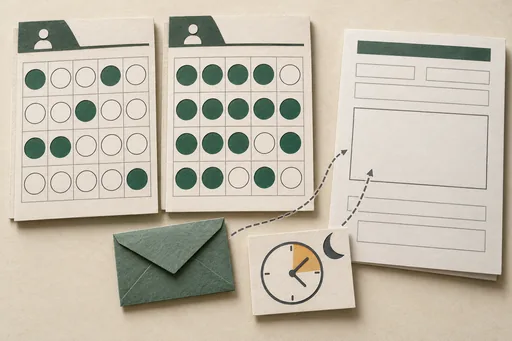
How to check causal claims in an AI answer
How to spot the leap from an observation to an unsupported cause in an AI analysis. A fictional attendance example shows how to document a claim, revise its wording, and identify the missing evidence.
Read article ↗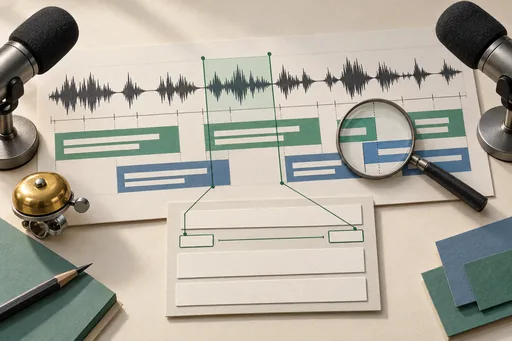
Microsoft AI: MAI-Transcribe 2 — an interview map with speakers and timestamps
A practical review using an illustrative interview with a bicycle mechanic. Covers confirmed SeaGenera settings, two request examples, an excerpt map, speaker checks, and the pricing principle without paid testing.
Read article ↗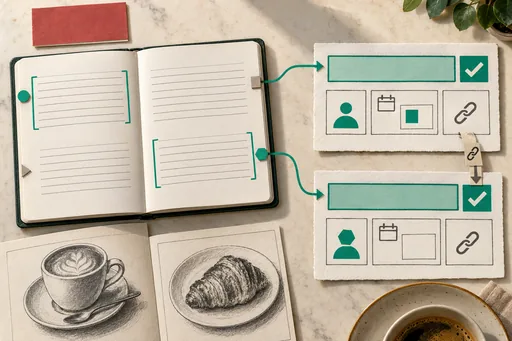
How to turn meeting notes into action items with AI
How to extract agreed actions from meeting notes, preserve conditions, and avoid assigning someone an unaccepted suggestion. A fictional café menu discussion illustrates a prompt, a completeness check, and a process for confirming action items before work begins.
Read article ↗
Context and long-term memory: what to keep between conversations
How to separate current request information from application memory, update preferences, and verify their removal. An illustrative notification language example defines record fields, application rules, and six verification scenarios.
Read article ↗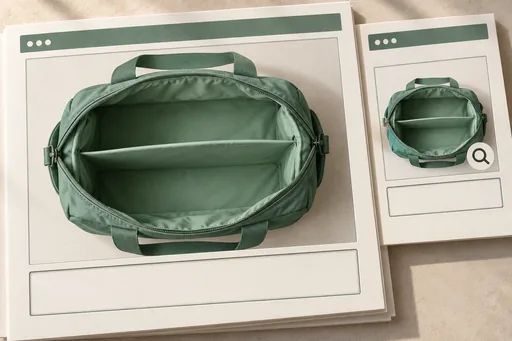
How to draft image alt text with AI and check it on the page
How to explain an image’s purpose to AI, draft a useful text alternative, and review it in publication. A fictional bag example illustrates the differences between describing a photograph, naming an action, and handling a decorative image.
Read article ↗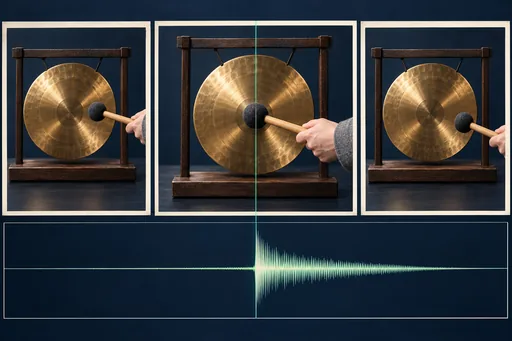
MiniMax: H3: checking motion and sound in a short video sting
A practical H3 review using an illustrative eight-second sting featuring a gong strike. Covers prompts, SeaGenera settings, reference limitations, audiovisual sync checks, and pricing principles without paid tests.
Read article ↗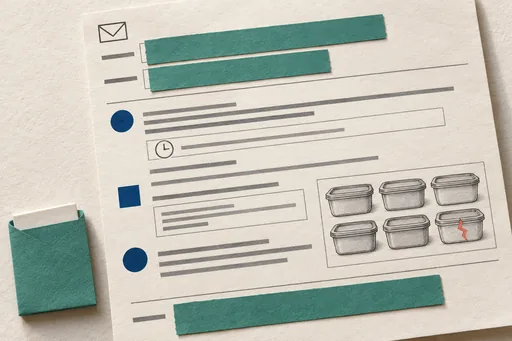
How to remove unnecessary personal data from an email before using AI
How to prepare a copy of a customer email for a text model: remove unnecessary details, preserve relationships between participants, and check timing and conditions. A fictional example demonstrates the replacement process and two checks before submission.
Read article ↗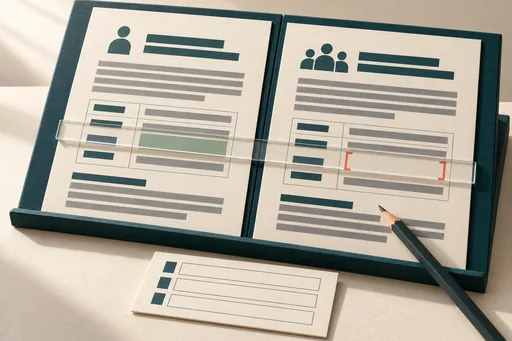
How to manually review an AI translation before release
How to compare a source and its translation, document specific errors, and inspect text in an interface. An illustrative example, issue record, and acceptance rule help produce a verifiable release decision.
Read article ↗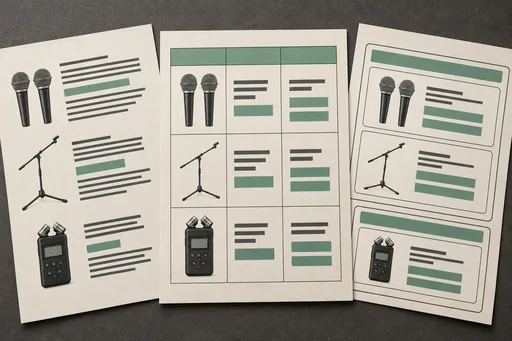
Text, CSV, or JSON: choosing an AI response format
How to choose a format for the next step: editing, spreadsheet import, or transferring nested data. An illustrative audio equipment example helps define the unit of a record, specify the response, and check the transfer.
Read article ↗
ByteDance Seed: Seedream 5.0 Flash: changing a product photo’s setting
A practical model review using a folding desk lamp: prepare a reference, develop alternative settings, and detect changes to the product’s construction. Covers SeaGenera settings, mode limitations, and billing principles without paid tests.
Read article ↗
How to simplify instructions with a small language model while preserving conditions
A small language model can assist with a bounded editing task. An illustrative example shows how to simplify instructions, preserve deadlines and exceptions, check readers’ decisions, and identify when manual editing is needed.
Read article ↗
How to test temperature changes in a single AI model
A practical protocol for testing temperature: freeze the request, run repeated trials, and assess exact wording separately from factual consistency. An illustrative notification example helps build an experiment log without promising perfect reproducibility.
Read article ↗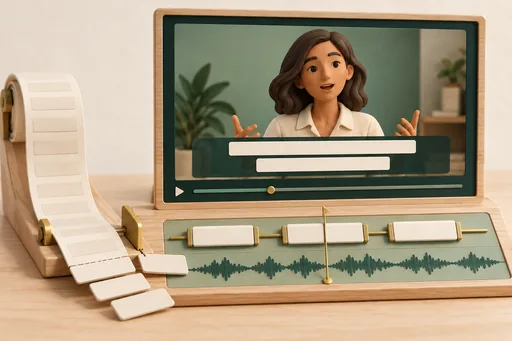
How to turn an AI transcript into readable captions
How to divide an approved transcript into caption blocks, set their display times, and check them in a player. An illustrative example separates the text model’s contribution from verification against the recording.
Read article ↗
Qwen: Qwen3.8 Max (0902): turning a text brief into a workable plan
A practical review of the exact 0902 snapshot using an illustrative task: preparing 60 workshop kits. Covers prompts, dependency and deadline checks, reasoning settings, SeaGenera limitations, and how pricing works.
Read article ↗
How to connect shots in a short AI video and maintain action continuity
How to plan each shot’s opening and closing state, check the cuts, and repair breaks in the action. An illustrative example featuring a toy boat helps build a clear sequence of three shots.
Read article ↗
Three checks before passing AI-generated JSON to an application
How to check the syntax, structure, and meaning of a model’s JSON response separately. An illustrative schedule and eight verification cases help define which data an application should accept.
Read article ↗
Preparing a table for AI: preserving rows, numbers, and missing values
How to prepare an analysis copy of a table, describe its fields, and establish control totals. An illustrative example shows how a duplicate row and an unknown outcome affect return rates and how to verify the model’s answer.
Read article ↗
How to measure AI app latency until the answer is complete
A simple protocol for measuring waiting time: three on-screen events, accounting for incomplete attempts, and the share of usable answers delivered on time. An illustrative example and a repeat check help assess a specific user workflow.
Read article ↗
How to authorize AI agent actions before a tool runs
How to place authorization between a model’s proposal and an action: restrict access, validate parameters, and bind approval to a specific send operation. An illustrative support workflow and test scenarios help verify protection independently of model behavior.
Read article ↗
AI API errors: when to retry a request and when to stop
How to distinguish temporary failures, request errors, and unknown outcomes, limit repeated sends, and preserve completed results. An illustrative example and verification scenarios help establish a clear retry policy.
Read article ↗
Test pairs for an AI classifier: what should change the answer
How to build a small collection of message pairs where the correct category either stays the same or changes. Illustrative examples, independent label review, and scoring of fully correct pairs help reveal specific classifier failures.
Read article ↗
How to summarize an AI session for a developer handoff
How to create a concise development state record, preserve constraints, and separate proposals from verified results. An illustrative example and a resumption test help check whether the recipient can continue the work.
Read article ↗
How to verify links and quotations in AI answers
How to check a source address, compare its content with an AI claim, and verify a direct quotation. The practical result is a verification record, a corrected illustrative example, and a review process to use before publication.
Read article ↗
How to separate AI instructions from the text it reads
How to preserve your task when reviews, emails, or documents contain instructions addressed to AI. The practical result is a summary template, an illustrative example, and six checks covering both task hijacking and the loss of useful content.
Read article ↗